No matter where you are in the United States you may have seen a car proudly displaying the bumper sticker, “This car climbed Mt. Washington.” The majestic mountain boasts the tallest peak in the Northeastern United States, and scaling it by car (much less on foot!) is no small feat. One can especially imagine how tough it might be in a vehicle worn by age and run through thousands of miles of terrain, both smooth and rough. The pay-off, however, is worth it. The scenery on the way up is breathtaking, and reaching the peak promises a view of stunning beauty and tranquility. One could visually sweep the landscape and experience a kind of theophany – a manifestation of God in the awesomeness of His creation.
 The Gospel also tells of a particular mountain climb that yielded an unexpected yet magnificent view. The evangelists Matthew, Mark and Luke each recount the ascent of Jesus and His three closest disciples (Peter, James and John) to Mt. Tabor. What might have been a routine hike to get away from the crowds and find a quiet moment became a theophany to rival any experience of beauty or wonder previously experienced by the three. While on the mount Jesus’ appearance changed suddenly and radically. His garments become white as snow, and His face shone with a heavenly glow. As if this were not amazing enough, Moses and Elijah appeared on either side of the Lord! The three carried on a conversation which seems to have been heard, at least in part, by the surprised apostles. Peter – always first to defend the Lord, or to put his foot in his mouth – tells Jesus how great it is to witness this miracle with his brother apostles! In fact the whole thing is so awesome that he suggests they all just hang out together on the mountain, and offers to set up tents for Moses and Elijah. Just as Peter finishes speaking a voice booms from above, proclaiming, “This is My beloved Son, in whom I am well pleased. Hear Him!” (Mt 17:5). And that quickly the excited apostles fall down in fear. This party was not what they’d planned on, and they knew it! A moment later Jesus touched them and when they had the courage to look up everything was as it had been before. There were no heavenly visitors or other-worldly voices. All that remained was Jesus, their teacher and friend.
Much could be said about the theological truths we learn from this incident in the Gospel, but one of the most important is that Jesus gives the apostles – and us – not only a glimpse of His divinity, but a foreshadowing of our destiny. We are meant to one day radiate with the light of God’s Love in eternal unity with the Trinity. This is what we were made for and the end toward which we walk on our earthly pilgrimage. But this great theophany also warns us that we will be confronted with mountains along our way, and with choices about how to scale them.
I think we encounter lots of mountains in our lives, chief among them that gargantuan peak called “sin.” It’s the one always found on our road, constantly before us as we traverse the highways of our pilgrimage. Each of us has mountains that lead us “off road,” or block us from moving forward. Each one of us must identify those mountains and choose the way that will allow us to scale and conquer them; or to find a road that leads us in a new direction.
This requires reflection (the kind that Peter was missing on Tabor), and willingness to acknowledge what is preventing us from progress. So what are your mountains? Could one be envy over what you lack, or a grudge tightly held against another? Perhaps you are held fast by a mountain of pain over a hurt committed against you. There are so many mountains, great and small, but when it’s your mountain it may seem insuperable.
How do we find the road that leads us over, through or away from these mountains and finally place them in our rearview mirror? That’s the easy part. God gives us the GPS to direct us: the free gift of Himself in the Sacraments, prayer and worship, and the support found in the communal life of the Church. What’s often hard for us is finding the courage to program our personal coordinates into that GPS and get started on the journey. Sometimes we’re hesitant to follow the directions because it’s too hard or painful, or we just don’t trust that we won’t get lost or hurt. Or the way can look good on its face as it did for Peter; but like him we get overwhelmed and lose our nerve. And yet, as He was for the brash, then frightened Peter, Jesus is there for us. He is always there. The mountains will still show up along the way, and the climb won’t be easy. Following Jesus doesn’t make the climb easy; but He makes it possible, and He is with us for every step we take.
“Amen, I say to you, if you have faith the size of a mustard seed, you will say to this mountain, ‘Move from here to there,’ and it will move. Nothing will be impossible for you.” Mt 17:20
Ann M. Koshute teaches theology for Saint Joseph’s College Online.
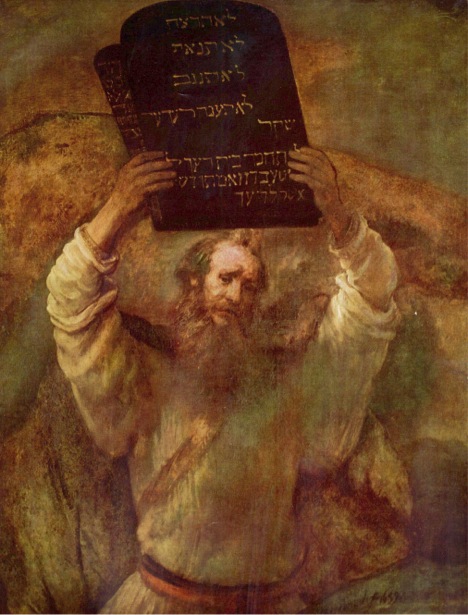
 sed to reveal His ‘beauty’ or ‘goodness’ (tub) to the prophet (Ex 33:17-19). But rather than simply display His presence, God also speaks His glory to Moses. While passing over Moses, God utters His divine name (see Ex 3:14) – a very intimate act – and then verbally communicates His presence. God says: “The LORD, the LORD, a merciful and gracious God, slow to anger and rich in kindness and fidelity” (Ex 34:6). This revelation of God’s nature, i.e., “slow to anger and rich in kindness,” is almost axiomatic in the Hebrew Scriptures (e.g., Nm 14:18; Neh 9:17; Ps 85:15; 103:4-8; 145:8; Jl 2:13; Jon 4:2; etc.). In other words, later prophets and psalmists discerned well that this phrase reveals – as much as human words can – something essential of God’s divine nature.
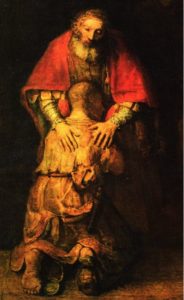 ontained in the parable of the Prodigal Son (Lk 15:11-32). Although much can be said of each of the main characters in this parable, the father in this story mirrors well the love and patience which our Heavenly Father has for each one of us. When his spendthrift son asks for his inheritance (which is tantamount to saying, “I wish you were dead so that I could have my money now!”), the father honors the freedom of the son and acquiesces to his request. Upon the son’s return the father spies him from “a long way off,” suggesting that he has been vigilantly awaiting this moment, and embraces his son with neither reserve nor hesitation. Despite living a life of debauchery and impurity, squandering his inheritance on prostitutes and tending to unclean animals, the son’s sincere contrition and confession are enough to send the father into a flight of rapturous joy.