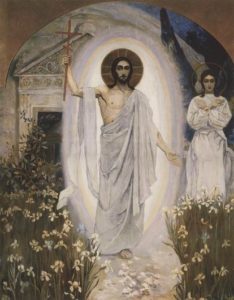
 Christ is risen! He is risen, indeed!
If there is any doubt about the veracity of that acclamation, the “indeed” removes it.
In contemporary academia, awash in moral relativism, the emphasis often is placed on skepticism at the expense of certainty – that is, the divorce of reason from faith. True intellectual engagement, however, need sacrifice neither questioning nor certainties. Faith and reason can and ought to live together in a wonderful and lively union.
When I was in graduate school, I participated in a student forum. It was a diverse group: a few Protestant ministers and a mix of Catholic lay and religious. The faculty mentor was a nominal Christian who described the Scriptures as something scholars must “push up against.” We had a meeting during Holy Week on how to preach on the “resurrection” (quotation marks intentional). One of the students said that if she were to preach an Easter sermon, it would be on the passage in John 20 in which, after the resurrection, Mary “recognizes” Jesus in the gardener. The theme, she said, is that the importance of Easter is that Mary experienced the resurrection, and not that it happened as a matter of fact. Implicit in this statement is that the resurrection may not have happened in-deed. Christ is risen! He is risen, in my experience! Surprisingly, my forum group thought this was a good idea, and anyone who disagreed with this notion kept quiet for fear of embarrassment at being a believer.
A faith that becomes subjective and privatized lacks true transformative power. It is a vanity that leads to despair when the bloom of youth and vigor fail. As Saint Paul preached to the Corinthians, “if Christ has not been raised, then our preaching is vain; your faith also is vain” (1Cor. 15:14). Saint Paul admonishes the Corinthians to the contrary:
Christ has been raised, and because of this, so also shall we: Now if Christ is preached that He has been raised from the dead, how do some among you say that there is no resurrection of the dead? … But now Christ has been raised from the dead, the first fruits of those who are asleep. For since by a man came death, by a man also came the resurrection of the dead. For as in Adam all die, so also in Christ all will be made alive…
1 Corinthians 15:12, 20-22
And what will Christ’s resurrection mean? Behold, I tell you a mystery; we will not all sleep, but we will all be changed, in a moment, in the twinkling of an eye, at the last trumpet; for the trumpet will sound, and the dead will be raised imperishable, and we will be changed. For this perishable must put on the imperishable, and this mortal must put on immortality. But when this perishable will have put on the imperishable, and this mortal will have put on immortality, then will come about the saying that is written, “Death is swallowed up in victory.”
“O Death, where is your victory?
O Death, where is your sting?”
The sting of death is sin, and the power of sin is the law; but thanks be to God, who gives us the victory through our Lord Jesus Christ.
1 Corinthians 15: 51-57
Every Easter for close to twenty years now, I think back to that forum, and how thankful I am to have had other wonderful faculty mentors who were great scholars and believers in the resurrection, and how grateful I am to be teaching at a Catholic college that marries faith and reason in a wonderful and lively exchange.
Christ is risen! He is risen, indeed!
Patricia Ireland is the Director of Theology Programs for Saint Joseph’s College Online.
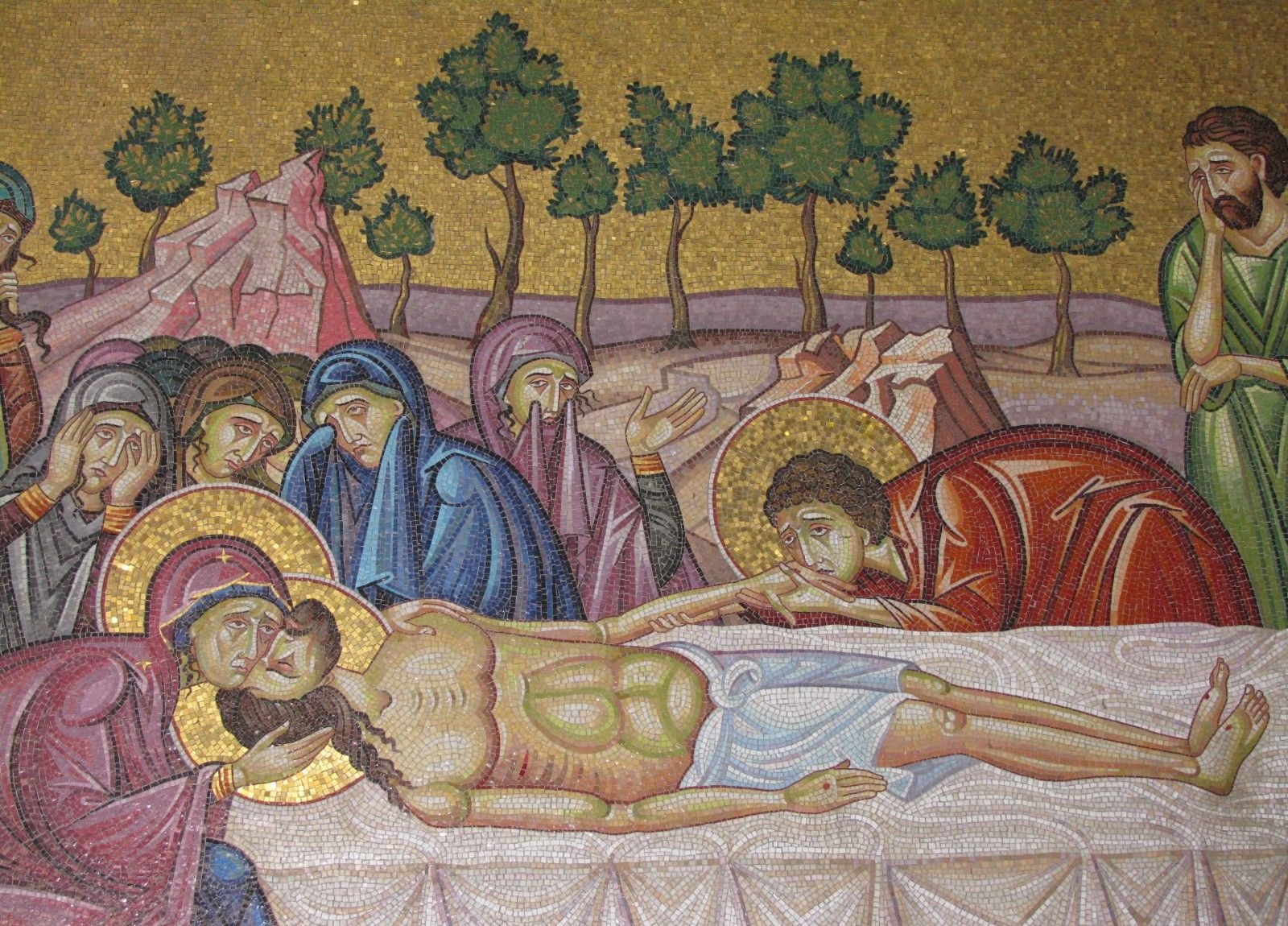 Of course, on Good Friday, we are present at the trial, condemnation, and crucifixion of Jesus, playing our role in His suffering, “Crucify Him! Crucify Him!” Leaving Good Friday service, I am always left with a keen awareness that the tabernacle is empty, that all tabernacles are empty. I must admit, it scares me a bit – to think that Jesus is not here! Yes, I know he is in my thoughts and in my heart, but that makes his presence dependent on me. In the Eucharist, he is here in a much fuller capacity (indeed, the fullest) than I could ever imagine spiritually – and I can feel that presence in front of the Blessed Sacrament. It is a grace far beyond me. With that presence gone, I feel the inadequacy of my own memories of Jesus.