When you really think about it, water is life. Our bodies are made up of over 50% water, and we must stay hydrated in order to live. The human person can go some three weeks without food, but after three days we’ll die from lack of water. As of this writing California is facing one of its worst droughts, devastating crops and the economy. Water is life: it cleanses, refreshes, and helps us grow food. Water is beautiful, whether in the form of a snowy mountain, the rush of Niagara Falls, or in the soft morning dew of the spring.
Water can also be destructive. Torrential rains can bring mudslides and flooding, potentially resulting in the loss of homes, and even lives. Too much water causes havoc in the home – from a flooded basement to an overflowing toilet. Water can cause illness, as some of us may have experienced during overseas travel. In some places water is simply not usable for anything or anyone.
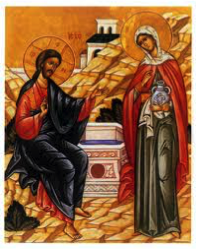 Water is power. This is nowhere more evident than in Jesus’ encounter with the Woman at Jacob’s Well. The midday sun is scorching, and when a lone woman comes to the well to draw water, Jesus asks her for a drink. The encounter between Jesus and the Woman is one of the most fascinating in Scripture, and while a reflection on their exchange could fill pages, we’ll just focus on the water. We learn through their conversation that the Woman comes to this well with a past – and with a present that leads her there at the worst possible time, (when the sun is hottest) to avoid association with the other women of the village. This woman is stuck – in sin, isolation, and a pattern of behavior that keeps her from social, emotional and spiritual growth.
As far as she knows, Jesus is completely unaware of her situation. After all, He’s a “random stranger” whom she finds unexpectedly sitting at the well. His request seems simple enough – “Give me a drink” – if not somewhat inappropriate. A man speaking to a woman who is alone, and whom he doesn’t know, was improper, and could have been dangerous. Yet a simple question from a mysterious stranger leads the Woman to realize that the stranger isn’t really thirsty for water at all. This man is thirsting for her, though not in the same way as her previous husbands or current paramour. This man thirsts for her. He wants to flood her heart with mercy and love, destroy her sin and self-doubt, and refresh her spirit so that she can thirst for others. The Woman’s thirst will be for them to know the healing, cleansing power of the water “welling up to eternal life.” (Jn 4:14).
The power and force of Jesus’ love is symbolized in the water He offers the Woman. The water she’s been drinking lacks freshness and contains impurities that affect its palatability and effectiveness. It “gets the job done,” (quenches thirst, washes the body and cooks food), but it’s never quite good enough. Nothing is as clean as it could be, and the Woman’s lips and throat become parched again. Jesus wants her to cease being simply satisfied, and instead become sanctified. In the end, Jesus’ encounter with the Woman at the well is a proposal. He asks her to leave behind those things in her life that will “just do,” and invites her to open her heart to a flood of love and joy that will enlighten and transform.
Tradition names the Woman at the well Photini – the one who “saw the light” in her 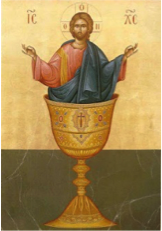 encounter with the Christ. On the fifth Sunday of Easter, Eastern Catholics and Orthodox Christians remember Photini, both as the wary, suffering and isolated sinner; and as the woman who is reborn and called by a new name. It’s good for us to look to Photini because each one of us is her. We are met by Jesus at the well too. Our jars are filled with suffering, anger, illness, loss, and any number of difficulties we carry at the moment. These jars are dirty and porous, inadequate for what we need. The well we often slip away to when no one else is around is Sin, and the water we draw seems to “do the job,” but just barely, and only temporarily. This water dehydrates us, sickens us, and dulls our palates. We carry our old, inadequate jars and draw the stagnant water because we’ve ignored Jesus’ proposal, or we can’t bring ourselves to believe He’s truly inviting us. Sometimes we say “yes” to Him, but later revert back to old patterns and old jars. Sometimes we don’t even show up to the well at all.
But Jesus is there. He’s always there at the well of our hearts, waiting. Will you accept a drink from Him?
When the Samaritan Woman came to the well with faith, she beheld you, O Water of Wisdom. She is famed in song, for she drank deeply and inherited the kingdom from on high. Kontakion for the Sunday of the Samaritan Woman
Ann Koshute teaches theology for Saint Joseph’s College Online.
 expand the depth, scope, and meaning of this beautiful prayer that is sung, chanted, or read every evening in the liturgy of the hours.