 Today, March 8, in many places around the world is celebrated as International Women’s Day. I first learned this when I was living in Rome and at the end of Mass every woman leaving church was handed a sprig of yellow Mimosa flowers. Ever since that day, I have marked International Women’s Day in some way. Today, I will give thanks for the many women throughout Church history who have been models of what St. John Paul II termed “the feminine genius.”
In his letter to women, (Mulieris Dignitatem) he spoke of the need for the Church to recognize and raise up the gifts of women both within the church and within society. He addressed the sad part of church history in which the Church failed to protect and promote the dignity of women and to make full use of women’s gifts. Since the publication of that letter in 1987, great strides have been made in opening up positions for women in all fields of theology, pastoral ministry, and diocesan leadership and in Catholic institutions. Pope Francis has spoken a number of times about creating new leadership roles for women at the Vatican. With all the attention given to what the future might hold, we sometimes forget to honor our past.
The Church’s primary mission is to invite people to an encounter with Jesus Christ and to find new life in Christ, in and through Baptism and the sacramental life of the Church. In Baptism, we are called to holiness—to live out the fullness of the Gospel in our lives. At no time in the Church’s history did it make a distinction between men and women with regard to the universal call to holiness. In fact there is a long and rich history that in every age, the Church recognized women who lived the Christian life in a full and distinctive way. Beginning Mary Magdalene, often called the “Apostle to the Apostles” who was the first to announce the good news of Our Lord’s resurrection to the other Apostles and most recently St. Rosa Eluvathingal, an Indian Carmelite nun who was known to be a woman of deep prayer and a gift for intercession, the church and world has been enriched by the feminine genius of Catholic women. The United State is blessed with seven women saints who illustrate the tremendous contribution Catholic women have made to church and society.
Elizabeth Ann Seton, Mother Katherine Drexel, Kateri Tekakwitha, Marianne Cope, Frances Xavier Cabrini, Rose Philippine Duscheneand Thodore Guérin represent women who as educators, healers, social justice advocates, and faithful to Our Lord, even in the face of death, as in the case of Kateri, exemplify the feminine genius in a specifically Catholic and American expression. These women, like many of their sisters in faith from all parts of the world, were often first in their fields or lived in a time when the Church was the only place women served as college presidents, founders of hospitals and schools,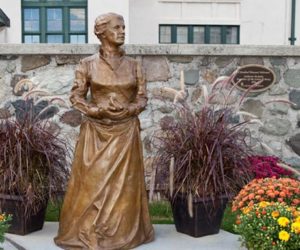 reformers of their religious communities and advocates for those without a voice. Mother Catherine McAuley whose statue graces the lawn of St. Joseph’s College is a reminder of the contribution of women to Catholic education in the United States.
As we look forward to Pope Francis’s vision for expanding the role of women in the Church, let us also celebrate and remember that we follow in the footsteps of our sisters who were martyrs, mystics and missionaries, daughters of God and daughters of Mary, Our Mother, who as Pope Francis said “under the guidance of the Holy Spirit and with all the resources of her feminine genius…has not ceased to enter ever more into ‘all truth’” (Address to International Theological Commission, 2014).
Susan Timoney is the Assistant Secretary for Pastoral Ministry and Social Concerns for the Archdiocese of Washington and teaches spirituality for Saint Joseph’s College Online.