
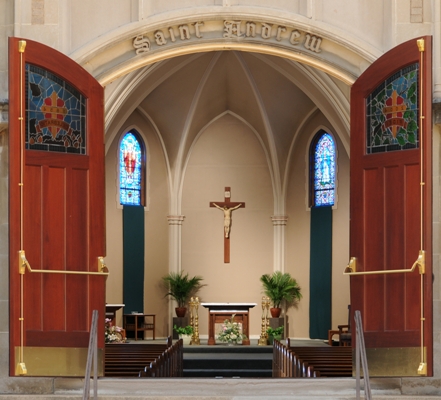
This Tuesday, Pope Francis ushers in the Jubilee Year of Mercy! I have waited for this day, since the announcement occurred this past spring, via the reading of Misericordiae Vultus, the Bull of Indiction of the Extraordinary Jubilee of Mercy. Jubilees do not come along every day; that is why the magnitude of this event is deemed extraordinary. The graces offered this year should not be taken for granted, or worse, dismissed by the faithful.
Our world suffers from turbulent events; abortion, suicide, euthanasia, gun violence, terrorist attacks and wars. Bottom line we kill each other, and/or ourselves. We do the farthest thing from God’s will; to love one another as the Father has loved us. We desperately need God’s Mercy. As a human race, we have truly spiraled downward. We need His loving touch of Mercy to lift us from our self-made abyss of sin and suffering.
Through God’s mercy we heal. Through God’s mercy “we may become a more effective sign of the Father’s action in our lives” (MV 3). When we receive God’s mercy through the Sacrament of Reconciliation, God replaces our guilt and shame with joy. That joy emanates outward for others to see. He fills us with true Christian serenity; Christ’s Peace. That sense of Peace also emanates outward in our Christian witness.
What can we expect during this Extraordinary Jubilee of Mercy?
- On December 8, 2015 Pope Francis will open the Holy Door of Mercy, “through which anyone who enters will experience the love of God who consoles, pardons, and instills hope” (MV 3).
- On December 13, 2015 the Holy Door of Mercy opens at all cathedrals throughout the world.
- During Lent 2016, Pope Francis will send out Missionaries of Mercy; designated priests, enabled to “pardon even those sins reserved to the Holy See” (MV18).
- On March 4-5, 2016, we can participate in a worldwide initiative called “24 Hours for the Lord” where the Sacrament of Reconciliation will be offered in every Diocese (MV 17).
- On November 20, 2016 the Extraordinary Jubilee of Mercy will come to an end, but with the knowledge that Christ’s Mercy is endless and always readily available to everyone.
What can we do to make the most of this Extraordinary Jubilee of Mercy?
- Allow God to surprise you (MV 25).
- Embrace the call to mercy (MV 18).
- Listen to the Word of God (MV 13).
- Make an effort to reconcile yourself to God through the Sacrament of Reconciliation.
- Refrain from judging others.
- Be merciful toward others.
- Recognize the suffering of others and express compassion.
- Partake in the Corporal Works of Mercy (feed the hungry, give drink to the thirsty, clothe the naked, welcome the stranger, heal the sick, visit the imprisoned and bury the dead) (MV 15).
- Partake in the Spiritual Works of Mercy (counsel the doubtful, instruct the ignorant, admonish sinners, comfort the afflicted, forgive offenses, bear wrongs patiently, and pray for the living and dead) (MV 15).
I’m psyched! I’m ready to receive an outpouring of God’s Mercy. I’m ready to do my part in participating in the Extraordinary Jubilee of Mercy. How about you? Open the doors wide! Let God’s Mercy flow!
Virginia Lieto teaches theology for Saint Joseph’s College Online. Her new children’s book Finding Patience was recently published. She blogs at www.virginialieto.com.