
Proper Alignment in a Crazy World

In case you missed it, there was a presidential election earlier this month.  The outcome surprised almost everybody—certainly the “experts,” including theologians—and the aftermath has been decidedly traumatic.  What will happen over the next two to four years? Which policies will be reversed and which new ones will be established?  Like many Americans, I stayed up late watching the election returns.  The national media scrutinized every bit of available data.  I found myself learning more about counties in other states christ-kingthan I had known before.  Due to an unavoidably early work schedule, I went to sleep with the election undecided.  I woke to a new president-elect, a result very few anticipated.  Juggling that news with my regular routine, I ran across a reminder for this blog post’s deadline.  A glance at the liturgical calendar told me all I needed to know:  today is the Feast of Christ the King.
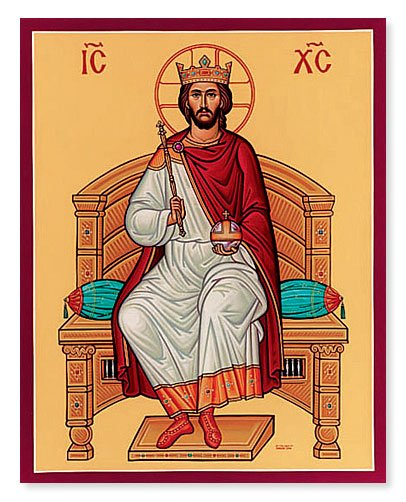
This knowledge made all the difference as the nation continues to struggle with the election’s aftermath.  Before, during, and after any human, earthly endeavor, Jesus Christ is Lord.  Stating this does not, despite the Marxist criticisms, relegate one to the realm of naïve spirituality and blithe indifference to the world’s problems.  No, God calls us simultaneously to the Church and thus into the world, too.  Vatican II states clearly: “God’s plan for the world is that men should work together to renew and constantly perfect the temporal order” (Apostolicam Actuositatem #7).  Politics is not some necessarily dirty, utilitarian struggle for hegemony.  Rather, political activity along with the whole gamut of economic, social, and aesthetic pursuits can and should foster and advance the good.  We need each other to come anywhere near accomplishing that goal.

Here we must always remember today’s feast.  Christ’s sovereign kingship transcends the created realm.  Our best accomplishments and worst failures occur therein.  St. John the Evangelist reminds us:  “The Light shines in the darkness, and the darkness did not comprehend it” (1:5).  Therefore, regardless of who wins a presidential election or how shocked we are at such results, no human creation—political, social, or otherwise—enjoys ultimate status.  We cannot conflate Christ’s reign with our temporary politics.  We cannot become, as Rod Dreher puts it, a people who make politics their religion.  Christ is king, not us.

This reality holds true forever, of course, but we enjoy this reminder at the very end of the liturgical year.  Next Sunday begins Advent, and so once again we prepare for the arrival and birth of that very King we celebrate today. This feast appeared rather late, historically speaking.  Pius XI instituted the Feast of Christ the King in 1925.  As blogged earlier here, I think Pius XI’s pontificate offers remarkable resources, both spiritual and political, for our twenty-first century reality.  This plenitude concerns us especially today:

Pius XI himself recognized the shift [towards secular totalitarianism] in 1925 with his encyclical Quas Primas. Released on December 11, 1925, the encyclical established the Feast of Christ the King, now celebrated on the last Sunday of the liturgical year. In so doing Pius XI returned to his papal motto and asserted Christ’s spiritual and temporal authority (see #s 15 & 17). Christian faith is necessarily embodied, and thus the Church stands in the world, but free from control by the secular state (see #31). The laity especially stand to benefit from meditation upon Christ’s kingship. If Christ died for all, then, Pius concludes, “it must be clear that not one of our faculties is exempt from his empire” (#33). Christ must reign in our minds, wills, hearts, and bodies. Each faculty contributes to both spiritual sanctification and social justice, and serves, Pius XI prays, as evangelical examples to all non-Catholics. The peace that passes understanding, if authentic, moves beyond the individual to include others, not just Catholics but all peoples. After all, each person possesses intrinsic dignity given by God alone.

Christ’s kingship lays claim to our entire selves—and this includes our relationships with all others:  marital, parental, emotional, social, economic, political, etc.  Today’s readings spell this out in great detail:  David’s ascendency, Psalm 122’s celebration of royal Jerusalem, and then St. Paul’s exhortation to the Colossians that Christ

He is the image of the invisible God,
the firstborn of all creation.
For in him were created all things in heaven and on earth,
the visible and the invisible,
whether thrones or dominions or principalities or powers;
all things were created through him and for him.
He is before all things,
and in him all things hold together.
He is the head of the body, the church.
He is the beginning, the firstborn from the dead,
that in all things he himself might be preeminent.
For in him all the fullness was pleased to dwell,
and through him to reconcile all things for him,
making peace by the blood of his cross
through him, whether those on earth or those in heaven.

The Gospel passage from St. Luke (23:35-43) depicts this in the most graphic terms. From the cross Jesus promises the repentant criminal they both will enjoy paradise that very day.  Interestingly, the Extraordinary Form readings—the ones Pius XI worked with himself when he declared the Christ the King feast—take a different path with St. Matthew 24: 13-25.  After prophesying apocalyptic signs of His return, Christ reassures the disciples: “Heaven and earth shall pass away, but My words will not pass away.” Following this presidential election, this passage might speak to some believing voters more immediately!  Exemplifying the well-known Catholic “both/and,” these readings together draw out fully the immanence and transcendence of Christ’s kingship.  In proclaiming the Year of Mercy, Pope Francis speaks to this balance:

We will entrust the life of the Church, all humanity, and the entire cosmos to the Lordship of Christ, asking him to pour out his mercy upon us like the morning dew, so that everyone may work together to build a brighter future. How much I desire that the year to come will be steeped in mercy, so that we can go out to every man and woman, bringing the goodness and tenderness of God! May the balm of mercy reach everyone, both believers and those far away, as a sign that the Kingdom of God is already present in our midst! (Misericordiae Vultus #5)

The Feast of Christ the King concludes the Year of Mercy, one in which we have sought to realize our spiritual convictions where we find ourselves.  This itself requires mercy, for we will make mistakes. Our sovereign Lord’s presence in the Church and the Eucharist repairs these errors.

God calls us to, and we should always seek, this proper alignment.  Then the wins and losses of our lives—personally and politically—regain proper perspective. After the inauguration the nation will see new endeavors and probably others continued from the previous administration. Just as with Obama, the Trump presidency will offer several opportunities to work with all people of good will to build and defend the common good.  Sometimes that pursuit will involve cooperating with government, sometimes perhaps not.  Regardless, we would do well to remember today’s solemn feast and readings and thereby recognize that only Christ reigns supreme. All other political claims are, ultimately, temporary.  To paraphrase St. Thomas More, we are the president’s loyal citizens—but God’s subjects first.

Guest blogger Jeffrey Marlett blogs at Spiritual Diabetes.
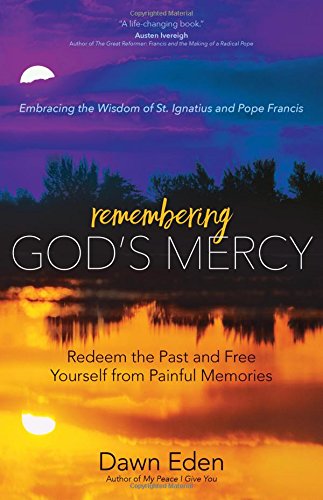
Book Review: Remembering God’s Mercy: Redeem the Past and Free Yourself from Painful Memories

As a cradle Byzantine Catholic I am well acquainted with the word “mercy.” I once counted the number of times priest and people intoned the words mercy, merciful or mercies in the Divine Liturgy. It’s fifty-four: 54 times in the course of an hour in which we beseech God’s mercy on ourselves and others. Fifty-four uses of the word mercy, not counting the particular propers, verses, and other special prayers of the day. In my lifetime, worshiping in the Liturgy alone, I’ve asked for God’s mercy hundreds of thousands of times – and, God willing, I’ll continue to seek His mercy for hundreds of thousands more. Despite all of this familiarity with mercy from my spiritual tradition, it took Pope Francis’ proclamation of a Jubilee of Mercy to get my attention and prod me to deep contemplation of not just the word mercy, but what it means for my relationship with God and others, and its vital role in my spiritual and emotional well-being. My journey into the heart of mercy has only just begun, and I now understand it’s meant to be a lifelong work. This summer I found a companion for this journey, one that opened me to new avenues of accessing and understanding not only God’s limitless font of mercy, but His enduring and immeasurable love for me.

“I wrote this book to share the good news that Jesus Christ heals our memories.” The opening line of Dawn Eden’s latest book, Remembering God’s Mercy: Redeem the Past and Free Yourself From Painful Memories, sets the stage for a spiritual journey written in the simple and effective language of a daughter of God inviting her readers to join in the search for His mercy. What we learn from reading is that the search isn’t really ours at all; rather, God looks for us, invites us, and waits for us to enter into the protection of His merciful love. Despite the emphasis on mercy in the Divine Liturgy, I needed to remember (or perhaps truly learn) that God’s mercy is not a concept, or a “thing” to be acquired, but God’s offering of Himself to me. Remembering God’s Mercy is that reminder – and much more.

I first encountered Dawn Eden when I read The Thrill of the Chaste.  Though I’m a “cradle Catholic,” I was in my post-metanoia phase, having undergone a serious re-conversion a few years earlier. At the time Dawn was a fairly new Catholic herself, and I was drawn to her zeal for Christ, and her poetic yet eminently readable style and good humor. I followed her exploits via her blog, and eventually we met, collaborated, and became friends. Her journey to finding the Faith, finding her vocation, and finding healing through God’s mercy is something I could relate to – especially in acknowledging that it’s not a journey with an end (not in this life, anyway) but a pilgrimage with ever-new and wonderful beginnings.

In some ways Remembering God’s Mercy picks up where Dawn’s second book, My Peace I Give You: Healing Sexual Wounds with the Help of the Saints ends. In that book she gods-mercy-edenreveals her painful memories of sexual abuse and its fall out: from a loss of belief in God to the questionable lifestyle choices that exacerbated her pain instead of alleviating it. My Peace is her story of conversion and healing, told through the example of saints who experienced trauma and abuse, lived through it and became, well…saints! The book is a personal story of hope, but also a primer on the Church’s teaching on the communion of Saints. Sure, they’re in heaven now – but they know all too well our struggles here in the trenches because they struggled too, and they’ve become our companions, intercessors and advocates.

In Remembering God’s Mercy, Dawn turns to Pope Francis’ pastoral sensitivity and emphasis on God’s mercy for inspiration – and the continuation of her pilgrimage of healing. For me, personally, the Pope’s call to embrace God’s mercy has been a profound learning experience. Perhaps my own tendency toward judgment and mercilessness toward others is due (not unlike the man in the parable) to my lack of appreciating the great mercy that has been freely given to me – to each of us. Acknowledging this weakness and learning from it is a big step toward seeking and accepting God’s mercy toward us, and being merciful to others in turn. Using the words of Pope Francis, as well as the particular example of SS. Ignatius Loyola and Peter Faber, Dawn invites readers to bring their personal experience, doubts, and pain to the well of God’s mercy and jump in. It isn’t easy – as Dawn’s story testifies – but it’s a risk we don’t take on our own. Grace is the life preserver that weak and frightened spiritual swimmers (like me) need in order to dive into the ocean of His mercy. “Grace,” says Dawn, quoting Francis, “enables us ‘to enter into dialogue with God, to be embraced by his mercy and then to bring that mercy to others.’”

Obviously for Dawn healing memory has a particular meaning relevant to her past experience of sexual abuse. But don’t let that deter you from reading the book. I admit to having been a little wary myself at the start, wondering if I’d be able to relate to an experience of memory (and mercy) so different from my own. It didn’t take long to realize that this isn’t a book exclusively – or primarily – for sexual abuse survivors. As I read I became aware that my own memory, while not filled with similar traumatic events, is also wounded and in need of healing. I can recall criticisms received when I was a child, embarrassing events from more than 30 years ago, and mistakes ranging from little boo-boos to producing life-altering consequences. Many of these memories are tightly bound and held in my consciousness, popping out in times of anxiety, change, and spiritual unease. I hadn’t realized how spiritually damaging such memories are – not to mention the toll they take on my self-esteem. Nor had I ever considered that God, in His infinite love for me, desired to heal these memories by an outpouring of His mercy. Worse yet, I never thought to ask. This revelation alone made reading the book provided unexpected comfort and hope.

Remembering God’s Mercy is a mini-retreat, an invitation to deep contemplation as well as an instruction on mercy through Scripture and the example of the saints. My favorite parts of the book are those where Dawn asks questions for personal reflection, and when she invites the reader to pray with her. (Her reflection on the Seven Sorrows in chapter 4 particularly touched me, and I will surely use it for further contemplation.) I was also moved by her recollection of being introduced to the Jesus Prayer by her friend and fellow convert Jeffry Hendrix, who later succumbed to kidney cancer. This simple yet powerful prayer – Lord Jesus Christ, Son of God, have mercy on me, a sinner – comes easily to my lips as an Eastern Catholic; perhaps too easily. Dawn recounts her discomfort with the prayer, believing it to be more a recitation of her wretchedness than a form of praise and supplication. It seems that trying to say the prayer was a fruitless effort. Only when faced with desperation (Dawn recounts an incident of where a painful memory from her past overtook her, causing great anxiety) did the words of the Jesus Prayer spontaneously arise from deep inside her:

“I said it again. And again. And, as I did, something happened…. The prayer was not leading me to self-pity. It was opening my heart to the purifying love of God.”

This is the beauty of God’s mercy in action, and the lesson we must learn in order to be embraced by it: to simply let go and be loved. Of course, God’s mercy comes with the charge to be formed by it, to be changed. But I must first know that God’s mercy is available to me, that He wants to give it to me, and that I am worthy of receiving it. It doesn’t matter if that knowledge comes as a result of the desperation Dawn describes, or if we can only weakly or even skeptically cry out to Him. God is there in our desperation and weakness and skepticism. As Pope Francis says, God “waits for us to concede him only the smallest glimmer of space so he can enact his forgiveness and his charity within us.”

Remembering God’s Mercy is a book one doesn’t simply read; it is to be contemplated. Dawn generously invites us into her heart and her faith, but the book isn’t a memoir; nor is it a “how-to” on surviving trauma. It is a call to personal reflection and an invitation to prayer. It is a book for everyone because it speaks to that longing in our hearts to be known by God, loved by Him, and held in His heart. Most importantly, the book is Dawn’s (and, if we join her, the reader’s) hymn of praise to the God who will never forget us, “for his mercy endures forever”!

*Final note – In her previous life, Dawn Eden was a rock and roll journalist, and music remains an important part of her life. A song she wrote for The Anderson Council lit up the airwaves on XM Radio this summer, and it’s worth a listen!

Ann Koshute teaches theology for the Saint Joseph’s College Online Theology Program.