During my doctoral studies in Rome, when the going got rough, I would head over to the church of Sant’Agostino near Piazza Navona to ask Saint Monica’s intercession. Monica is buried at the church named for her son, and she is for me a source of inspiration for what it means to grow in holiness.
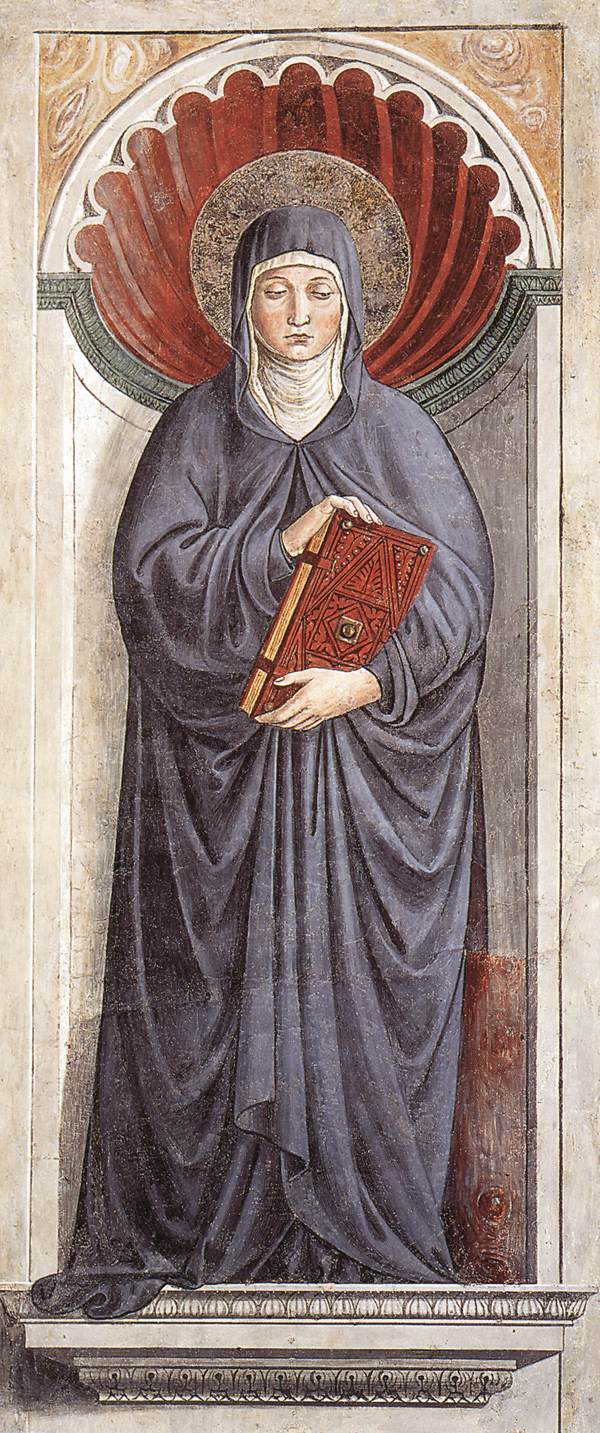 What I learned from Monica is why the church honors many of its sons and daughters with the title of “saint.” Their lives really have a timeless dimension that teaches, inspires and encourages Christians in every age. Monica, whose feast we celebrate today, is a testimony to the strength that comes in keeping God at the center of one’s life and making God one’s reference point in all things—in other words—never losing sight that holiness is the journey of life.
Whenever I am asked to lecture on the theme of the universal call to holiness, I begin by asking people to name people who they think are models of holiness. Always, always, Mother Theresa is the first or second to be named (no surprise there)! As names are added, we move from saints, to loved ones, to friends, but never does anyone ever name themselves! And yet, by virtue of baptism, all of us are called to holiness. We are much better at naming what disqualifies ourselves than recognizing that holy is what we are in the process of becoming. Monica teaches us that we need only to fix our gaze on God and holiness becomes possible.
From what little we know of Monica’s life, it would not be on any list of optimal environments for holiness to flourish. She discovered the enticement of alcohol as a teen, she married a man who was a drinker and known to be violent and unfaithful. She had a son who was too smart for his own good and a difficult mother-in-law who tried her patience. One could understand if the mark of Monica’s life was that of despair and yet her story is quite different.
Monica was raised in a Christian family. Her strong sense of self was grounded in her relationship with God. She was devout and committed to serving others. It is said that her husband, not a Catholic when they were first married, would criticize her for her piety and generosity, but she continued to be faithful, to be true to herself. She was faithful in the face of infidelity; she was kind in the face of ridicule. She loved her children with the love we learn only from God. In her love for her son, Augustine, we see that she saw something in Augustine that he did not see in himself. Trusting God’s providence, she prayed and prayed! She stayed close to Augustine, reminding him of what he could be rather than what he was. Monica entrusted him to God, knowing that she could only do so much. Tomorrow, the church celebrates how the story of Augustine ends!
Like, Augustine, Monica’s husband also saw the authenticity of Monica’s faith and her love for him and their children. He began to see the power of a faith that never wavered. He too converted. Monica’s patience and love and realization that she had God on her side became an irresistible invitation for her family.
Augustine writes in his Confessions, that shortly before his mother died, they were enjoying a conversation in the presence of The Truth–that is God– and speaking about the promise of eternal life. Augustine writes that in the conversation, “They were forgetting the past and pushing on to what is ahead” (Phil. 3:13). It is a good reminder to us that God is not as interested in our past as he is in our future. In Monica, we learn that we are most true to ourselves when our lives are oriented toward God and trusting of his providence.
Susan Timoney is the Assistant Secretary for Pastoral Ministry and Social Concerns for the Archdiocese of Washington and teaches spirituality for Saint Joseph’s College Online.