“The German Jesuit Alfred Delp, who was executed by the Nazis, once wrote: ‘Bread is important, freedom is more important, but most important of all is unbroken fidelity and faithful adoration.’ When this ordering of goods is no longer respected, but turned on its head, the result is not justice or concern for human suffering. The result is rather ruin and destruction even of material goods themselves. When God is regarded as a secondary matter that can be set aside temporarily or permanently on account of more important things, it is precisely these supposedly more important things that come to nothing . . . The issue is the primacy of God. The issue is acknowledging that he is a reality, that he is the reality without which nothing else can be good.” —Pope Benedict XVI.[1]
Our America is hard on believers in God, Catholics or Jews or Muslims. Believers may be, in Robert Reich’s words, “anti-modern fanatics . . . who believe that human beings owe blind obedience to a higher authority . . . who believe that truth is revealed solely through scripture and religious  dogma.”[2] Charles M. Blow in the New York Times pontificates, “I don’t personally have a problem with religious faith, even in the extreme, as long as it doesn’t supersede science and it’s not used to impose outdated mores on others.”[3] Is it in the DNA of the American culture to marginalize belief? Secularity has become a steering current for the direction of American polity, values, and culture.[4] Institutional secularity undermines social supports for the practice of faith and distracts from deeper existential concerns. It can swallow a church whole. Secular modernity discounts the transcendent claims of the monotheistic faiths. Secular humanism asserts humans are better off without transcendent visions. Without God, without religion, without illusions, humans prosper. “Thy will be done” gives way to “Be all that you can be!”
With insight Pope Francis in Joy of the Gospel states:
“The process of secularization tends to reduce the faith and the Church to the sphere of the private and the personal . . . while the Church insists on the existence of objective moral norms which are valid for everyone, ‘there are those in our culture who portray this teaching as unjust, that is, as opposed to basic human rights. Such claims usually follow from a form of moral relativism that is joined, not without inconsistency, to a belief in the absolute rights of individuals. In this view, the Church is perceived as promoting a particular prejudice and as interfering with individual freedom.’”[5]
In his The Secular Age, Canadian philosopher Charles Taylor distinguishes three uses of the term “secularity.”[6]
Secularity1 is where public spaces function without any reference to God or to any religious beliefs.
Secularity2 is where religious belief and practice have fallen off.
Secularity3 is where a society has moved from unchallenged and unproblematic belief in God to one in which it is understood to be one option among others, and frequently not the easiest to embrace.
All three pertain. Secularity1 is given constitutional warrant. Least problematic is secularity2’s decline in numbers, even if ex-Catholics are the second largest group in the country. How many of us there are is not the ultimate issue. In secularity3 belief in God is an implausible option at cross-purposes to the human good. Secularity3 includes two themes tensely at odds with each other, naturalism and anti-realism. The first holds that the universe is entirely material, based solely on physical causes. The second holds that the cultural world is a creation of humans who impose its concepts and categories.[7]
Catholic Americans should share what they have learned, and probe what needs to be learned, in order to live under, to live with, and perhaps to transform, America’s omnivorous secular polity, values, and culture. They need to create, or to recreate, a Christian culture, which will, at least initially, be a sub-culture.[8] They need to be, to use the Biblical term, “resident aliens.”
Daniel Sheridan is Professor of Theology at Saint Joseph’s College of Maine and former Director of the Online Theology Program.
[1] Jesus of Nazareth: From the Baptism in the Jordan to the Transfiguration (New York: Doubleday, 2007), p. 33.
[2] See Robert Reich: “The great conflict of the 21st century may be between the West and terrorism. But terrorism is a tactic, not a belief. The underlying battle is between modern civilization and anti-modern fanatics; between those who believe in the primacy of the individual and those who believe that human beings owe blind obedience to a higher authority; between those who give priority to life in this world and those who believe that human life is no more than preparation for existence beyond life; between those who believe that truth is revealed solely through scripture and religious dogma, and between those who rely primarily on science, reason, and logic.” The American Prospect (2008).
[3] Charles M. Blow, “Indoctrinating Religious Warriors,” New York Times (January 3, 2014).
[4] Culture is an open, complex, systemic whole of human behavior, and its artifacts, acquired and transmitted by symbols and language, constituting the distinctive achievement of human groups. Culture includes a specific polity and promotes values.
[5] Pope Francis, Evangelii Gaudium (November 24, 2013), #64.
[6] Charles Taylor, A Secular Age (Cambridge, MA: Belknap Press of Harvard University Press, 2007), p. 2-3
[7] See Alvin Plantinga, “On Christian Scholarship.” www.calvin.edu/acadmeic/philosophy/virtual_library_plantinga_alvin.htm.
[8] See Christopher Dawson, The Historic Reality of Christian Culture (New York: Harper & Brothers, 1960), pp. 14-15: “The only true criterion of Christian culture is the degree in which the social way of life is based on Christian faith. However barbarous a society may be, however backward in the modern humanitarian sense, if its members possess a genuine Christian faith they will possess a Christian culture—and the more genuine the faith, the more Christian the culture . . . And so when we talk of Christian culture, we ought not to think of some ideal pattern of social perfection which can be used as a sort of model or blueprint by which existing societies can be judged.”

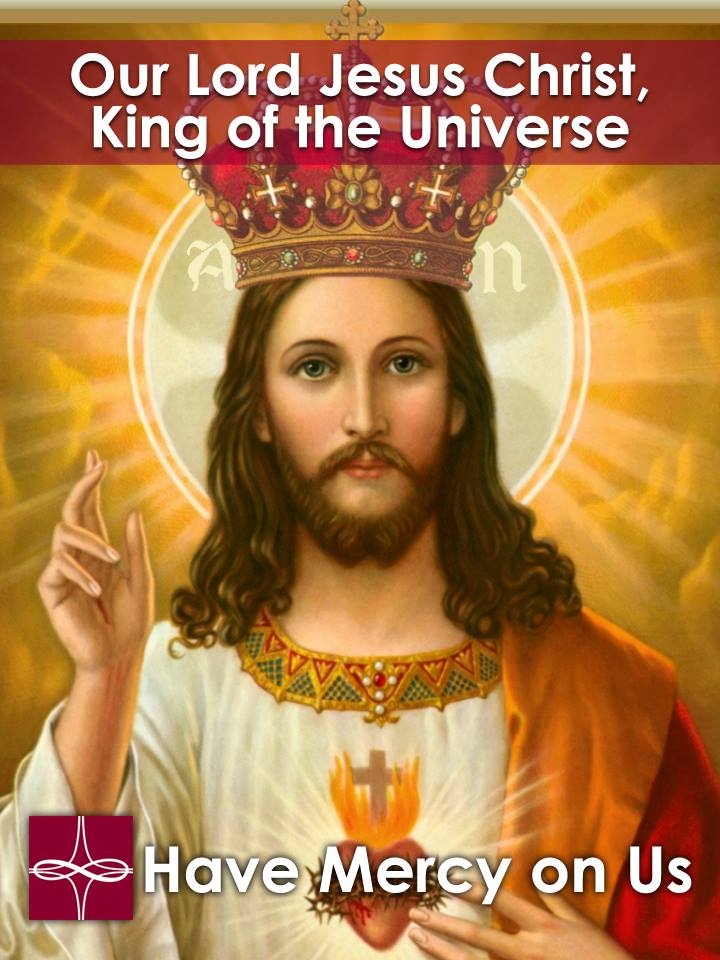 within our families, among our friends, or in our churches. We are sent as apostles, as witnesses of faith and charity to a world that is in need of hope. Faith grounds us in the One who is beyond us all but is also the One who knows us better than we know ourselves, God, who is Infinite Love. We are called to share this love in our acts of charity, justice, and service – building up a broken world not for ourselves or our own benefit, but as co-workers in the mission of Our Lord Jesus Christ, King of the Universe.