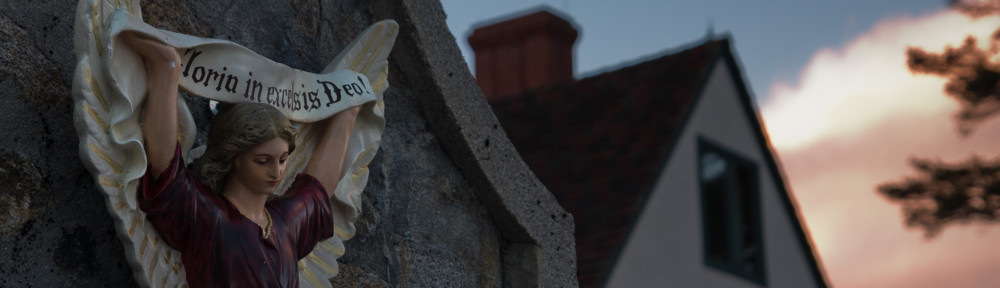
With Christmas having just passed, now is not the time for 1980s pop music nostalgia. However, the title (and very little else!) of John Mellencamp’s 1982 hit does recall Friday’s feast day of St. Stephen Proto-Martyr. Tertullian’s challenge continues to inspire: “The blood of the martyrs are the seeds of the Church” (Apology #50). Scripture itself attests to this; after S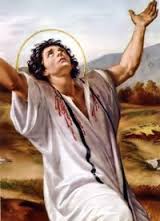 tephen’s murder, persecution actually spreads the Church further abroad (Acts 8:1). Once Saul himself converts, the dispersion accelerates even more. St. Mark repeatedly describes Jesus’ actions as immediate; St. Luke instead testifies to the Gospel’s relentless expansion. Nothing, not even death itself, thwarts it. Just before St. Stephen appears in Acts, Gamaliel the Pharisee warns: “For if this idea of theirs or its execution is of human origin, it will collapse; but if it is from God, you will never be able to put it down, and you risk finding yourselves at war with God” (Acts 5:38-39).
This reading, perhaps too common, cannot be separated from that this life-giving blood comes at great cost. John Allen, Jr., has among his many credits constantly shone light on the widespread persecution of Christians in the twenty-first century. This comes after the twentieth century, which witnessed regimes spanning the political spectrum willing to kill Christians who refused to forsake their faith for momentary political or social ease. It is very easy to type and read these lines; living them to follow Christ, as St. Stephen first showed us, is another matter. And yet that is our calling. Pope Francis has repeatedly made this very point. Nevertheless, this also requires joy. The angel first tells the shepherds: “Do not be afraid” (Luke 2:10).
The liturgical calendar offers little respite as the northern hemisphere’s days darken and then slowly regain the light. The year ends in November with the Feast of Christ the King, a feast instituted by Pope Pius XI in 1925 as a reaffirmation of God’s sovereignty confronted by human alternatives both fascist and Communist. Then four weeks of waiting through Advent are culminated in the Feast of the Lord’s Nativity. The very next day we are reminded, though, that death awaits us all and for some that will come precisely as a result of their belief in Christ. This juxtaposition should not surprise us; after all, just hours before we celebrated God’s incarnation, surely a juxtaposition like no other, that begins in a barn. The next day, December 27, is the feast day of St. John the Evangelist. In his own way St. John provided a harmonizing note for understanding martyrdom: “The light shines in the darkness, and the darkness did not overcome it” (John 1:5).
Guest blogger Jeffrey Marlett blogs at Spiritual Diabetes.

 sophisticated alternatives. Like the iPhone 6. Or the right job. Or the great relationship. But we are still just overgrown kids, vainly throwing Lego bricks into an infinite hole and wondering why we still feel lousy.
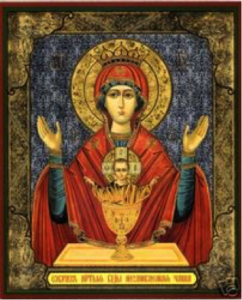 al, self-giving love of her Son Jesus. Like Christ arising from the chalice, so are we, as little Christs, resurrected into the newness of Christian life by his Eucharist grace. The Christification that God has achieved in Mary, he wants to do for each of us. What Mary has allowed God to do for her, she wishes us to experience through her maternal care. And we will, if we say fiat as she did.