
Lenten discipline requires the reconsideration of our spiritual state.
Deacon Scott Dodge (a great blog to follow after the St Joseph’s College Theology blog!) provides a thoughtful connection between popular culture and classic Christian art, specifically Grunewald’s Isenheim altarpierce, here. Deacon Scott: “The failure of our own words, of our ability to comprehend and articulate the greatness, the height, length, and depth of love of God’s great love for us should drive us to God’s word.” He then quotes Romans 5:6-9, but I would rather reflect on today’s Gospel, Matthew 5:11-17:
Jesus said to his disciples:
“Do not think that I have come to abolish the law or the prophets.
I have come not to abolish but to fulfill.
Amen, I say to you, until heaven and earth pass away,
not the smallest letter or the smallest part of a letter
will pass from the law,
until all things have taken place.
Therefore, whoever breaks one of the least of these commandments
and teaches others to do so
will be called least in the Kingdom of heaven.
But whoever obeys and teaches these commandments
will be called greatest in the Kingdom of heaven.”
Each of the four Gospels brings its own voice, comforts, and challenges to the story of Jesus Christ’s life, death, and resurrection. Among Matthew’s many gifts (e.g., 16:18-20), I find most rewarding and provocative Chapter Five’s intensifications of the Jewish Law. Thou shall not murder? Well, even if you’re angry with somebody, stop what you’re doing and seek reconciliation. Thou shall not commit adultery? That’s not enough—do not even look another lustfully. So much for the nice, domesticated Jesus we like to tell ourselves we already resemble. No, in Matthew’s gospel Jesus holds us to a higher, not lower, standard. And this is the Word of God to which Lent inexorably drives us, not a Jesus who confirms our smugly-held opinions, nor a Jesus who simply ignores our sins. As G. K. Chesterton so aptly put it, “the Christian ideal has not been tried and found wanting. It has been found difficult and left untried.” Who said this was going to be easy?
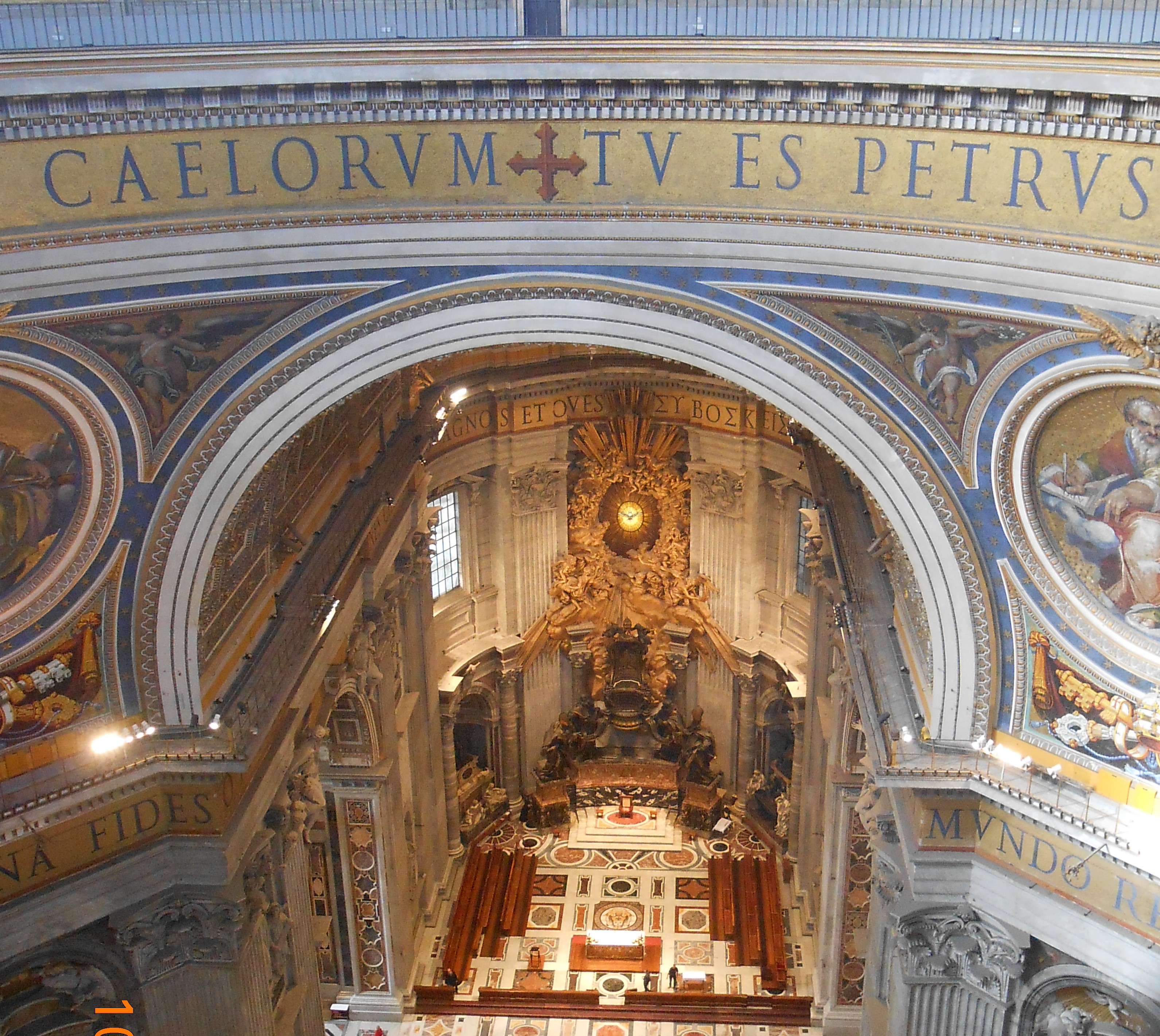 The Lenten stereotype depicts the unwillingly ascetic Catholic wallowing in self-abnegation. I, though, found Deacon Scott’s words about God’s greatness reminded me of the Swiss Reformed theologian Karl Barth (1886-1968). Barth often stood quite opposed to Roman Catholic theology, even as he avidly read St. Augustine and St. Anselm (among others). Good Calvinist that he was, Barth began his theology with the absolute sovereignty of God. Mankind cannot save itself; only God can do that. Barth asserted God’s NO! to all human pretensions to religious agency and self-direction. The YES that comes in the Incarnation overcomes that negation, but, Barth believed, the NO still remained. That, in part, was made grace what it was—thoroughly unmerited. While he spent far more time and ink lambasting fellow Protestants, Barth always considered standard Roman Catholic spirituality a target of that divine NO! Thus it is seems rather ironic that Wikiquote welds Barth’s famous words of YES and NO to…Gian-Lorenzo Bernini’s Holy Spirit stained-glass window gracing the western wall of St. Peter’s Basilica.
Gone are the days when I accepted prima facie everything Barth wrote. Deo gratias! However, occasionally a little Barth reinvigorates the theological project. Barth’s insistence on divine sovereignty resonates with the Gospel image of Jesus declaring the Law’s enduring presence. Not only that, but the NO! extends to our own teaching. Since the Law remains valid, we simply cannot invent what we want and disregard what we dislike. Knowledge of the Law implies teaching the whole Law. We can’t blunt the sharp edges to make it “nicer.” With his customary brevity and sharp insight, Father Robert Barron critiques this facile presumption that being Christian means being nice. Father Barron doesn’t mention Barth—he doesn’t need to—but the point remains: God calls us to something greater than merely being nice to each other.
While it wanders off to once-current issues, this post from my own blog addresses the same point through the lens of an Augustinian critique of American evangelical eschatology. It wasn’t until I had read St. Augustine that I began to understand my dislike for Protestant eschatologies: they were too easy and too self-assured. Chapter Five of Matthew’s gospel offers the initial, damning criticism: this will not be easier—quite frankly, it will be more difficult than before! That is a tough message to hear, which perhaps is why Christian history is filled with those seeking waivers. Christian theology is filled with so many false starts because of the failure to confront honestly today’s gospel: Jesus comes not to abolish, but to uphold, the Law which, by the way, remains very much in effect. It is to such stark reminders that Lent calls us.
Quite frankly, we don’t always start where we should. I started with St. Augustine, and then only later realized that St. Augustine himself points us all back to the Gospel (and thus the Gospels). And there we find both the negation of our human pretensions and yet simultaneously the reaffirmation of God’s love for us—in the same person, Jesus. So will the Way of Jesus be an easy ride? More than likely no—in fact, it can be quite bumpy and crooked. What was that about not abolishing? Yet Jesus also tells us: “I AM the Way, the Truth, and the Life” (John 14:6). So it is not easy, but it will be worth it—and along the way we receive life itself.
Guest blogger Jeffrey Marlett blogs at Spiritual Diabetes.

 reformers of their religious communities and advocates for those without a voice. Mother Catherine McAuley whose statue graces the lawn of St. Joseph’s College is a reminder of the contribution of women to Catholic education in the United States.