A homily from 2nd Sunday of Easter. Divine Mercy. April 3, 2016.
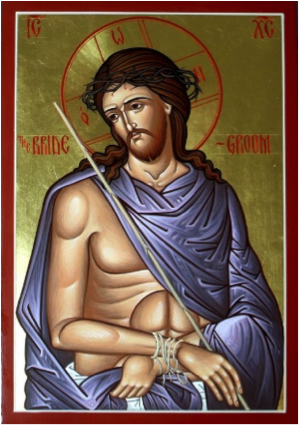
This is the third homily I have given this year. My turn comes on the first Sunday of each month. Each time, this year, the theme has been mercy. So the focus today on Divine Mercy Sunday should not be on “doubting” Thomas! There is something more important than “doubting” going on here. How about “the not-yet seeing” Thomas? How about “the not yet believing” Thomas? Finally, how about the Thomas who “questions”? Only through questioning can we discover the awesome truth of how necessary it was that Jesus should have died an innocent man’s death on the cross. His innocent suffering and death reveal the quality of God’s mercy, the Divine Mercy. Thomas questioned and not only was it revealed to him that Jesus had been raised from the dead. The fuller truth is that Jesus will carry the wounds of his crucifixion, the signs of his suffering and death on his risen body, forever and forever. “Put your finger here and see my hands, and bring your hand and put it into my side, and do not be unbelieving, but believe.” Suffering and death are swallowed up in victory. Death has no victory. But the suffering and death are never undone, only completed. In John’s Gospel, Jesus’ last words are “It is completed.” Forever and forever!
At the same time let us remember Jesus’ last words while dying on the Cross in the Gospel of Mark, the first line of Psalm 22, the Prayer of an Innocent Person. “My God, my God, why have you forsaken me?” Someone said, “Wait let us see if Elijah comes to take him down.” Of course, Elijah does not come down nor does God. God was silent. God used to be merciful but not now. Or was He? Or is He merciful?
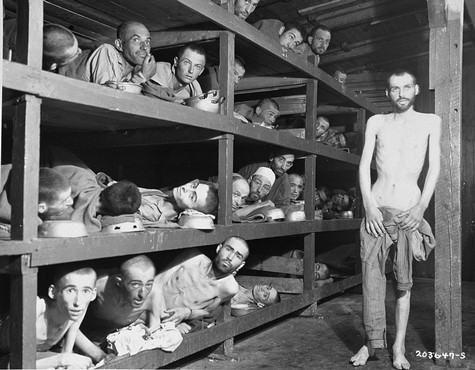 I am reminded of the Nobel Peace Prize winner, Elie Weisel and his famous memoir, Night. If you have not yet read this book, please do read it. It is one of the great religious books of the twentieth century. I am passing around a picture taken on April 11th, 1945, one of the most famous photographic remembrances we have of the Holocaust. That day the American army liberated Buchenwald. Weisel is the last person in the middle bunk in the middle row. Weisel’s literary reference to “Night” comes from the same Psalm 22 that Jesus cried out as he died: “My God, I call by day, but you do not answer; by night, but I have no relief.” God did not answer as six million Jews were incinerated. This has always startled Weisel, especially the death of the babies. They were all innocent.
He says: “Never shall I forget that night, the first night in the camp, that turned my life into one long night seven times sealed. Never shall I forget that smoke, Never shall I forget the small faces of the children whose bodies I saw transformed into smoke under a silent sky. Never shall I forget those flames that consumed my faith forever. Never shall I forget the nocturnal silence that deprived me for all eternity of the desire to live. Never shall I forget those moments that murder my God and my soul and turned my dreams to ashes. Never shall I forget those things, even were I condemned to live as long as God Himself. Never.”
That “night” Jesus suffered and died an innocent man. That night the babies suffered and died innocent babies. We must ask questions. If there is going to be any final justice in the world that God created where so much innocent suffering takes place, then God’s silence must be suffered. There can be sense here only if God can suffer. But our theology and philosophy say that God cannot suffer. Impassibilis est Deus. Yes, God cannot suffer. That is true. But there is more to God than God, especially when the Word became flesh and dwelt among us. Saint Bernard completes the phrase Impassibilis est Deus with, sed non incompassibilis. Pope Benedict translated this as: “God cannot suffer, but he can suffer with. Man is worth so much to God that he himself became man in order to suffer with man in an utterly real way—in flesh and blood.”
The seventh sign in the Gospel of John is the resurrection and the signs of Jesus’ suffering and death on his risen body, forever and forever. I have no answer for Elie Weisel’s questioning. He handles it with his Jewish resources. However, Thomas saw and believed, and now had a reason for hope. When we encounter the risen Christ and believe, we discover the only appropriate response to the Divine Mercy. That response is gratitude and hope. In the deaths of the innocents that cry out for justice, we discover a very strong argument why we need faith in the resurrection. But it works the other around. Faith in the resurrection, blessed are those who have not seen and yet have believed, is the only way that those innocent babies will have justice. Jesus did not die in vain. The babies did not die in vain. Jesus’ wounds mark his risen body forever. The babies’ burn scars will mark their risen bodies forever.
“Now Jesus did many other signs in the presence of his disciples that are not written in this book. But these are written that you may come to believe that Jesus is the Christ, the Son of God, and that through this belief you may have life in his name.” Amen.
Daniel Sheridan is Professor of Theology at Saint Joseph’s College and former Director of the Online Theology Program. He is a permanent deacon in the Diocese of Portland.