Love of learning can began in kindergarten and first grade.
Yes, some of us loved school from day one. In the spring 1952, I was in first grade at Saint Teresa of Avila school in an Irish and Italian American neighborhood in Brooklyn. My family had a television, one of the first in our apartment house. The Lone Ranger, Howdy Dooty, Kate Smith were among my favorites. The McCarthy hearings annoyingly interfered with my shows!
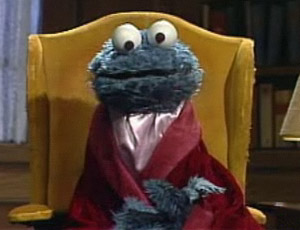 One Sunday I was watching Omnibus hosted by a young Alistair Cooke [Alistair Cookie to Sesame Street fans!]. I saw Australian aborigines dancing around a fire. The voiceover said this was how human beings lived 50,000 years ago. The next day I told Sr. Mary Charlotte that I had seen how people lived 50,000 years ago. She said it must have been an anti-Catholic show, since the world was created 5,000 years ago according to the Bible. On three counts, I knew that she was wrong (perhaps even then TV had more authority than a mere school teacher!). (1) The world was indeed older than 5,000 years [I had seen the dinosaurs at the Museum of Natural History[1]]. (2) The Bible did not teach that [my father, who I thought was the smartest man in the world, read me the first chapter of Genesis; we could not find any dates]. (3) The Catholic Church in which I was totally immersed could not be teaching something so intuitively wrong [years later in high school I found out that in 1952 the Church did not teach that the world was 5000 years old]! Thus I knew she was wrong on these three counts. However, I was polite and didn’t tell her. But I knew that it was an important “Catholic thing” to get it right. I think my vocation as a Catholic intellectual began right there.
My mother who did not finish the 9th grade always stressed that her six children get as much education as possible. She also tweaked her highly educated son by giving him a copy of All I Need to Know I Learned in Kindergarten. I told her that I indeed learned all I needed to know in the Catholic kindergarten taught by the same Sr. Mary Charlotte who taught me first grade. The lesson I learned was that I needed to learn a whole lot more. Thus even from kindergarten and first grade one can have a vocation to life-long learning.
Here perhaps is an intimation of a solution for Catholic higher education’s failure of nerve. If only we would remember our first grade and the love of learning that it inspired!
Daniel Sheridan is Professor of Theology at Saint Joseph’s College of Maine and former Director of the Online Theology Program.
[1]In 1952, one of the great Catholic intellectuals of the 20th century, Pierre Teilhard de Chardin, was working in the fossil warehouse of the Museum of Natural History, about six miles from where I was watching Omnibus.