Every church, synagogue, and mosque should have a sign: “If we are right, it matters.” America needs religions that function freely. America for the health of its polity, values, and culture needs many churches, synagogues, and mosques with their schools, hospitals, and social agencies. Why? Because America needs vigorous, sometimes raucous, multitudes who believe they are right, and who are willing to act on their belief. In counter-point to its secularity, America needs “out-ted” Evangelical Christians, fundamentalists, pro-life Catholics, Jehovah Witnesses, Hasidic Jews, the Amish, Quakers, Mennonites, Southern Baptists, Hindus, and Muslims of all kinds—acting on the belief that they are right. Through their beliefs, and they are indeed different, transcendent claims are made. For the flourishing of America, the religions must be allowed the freedom to attempt to be right and thus to matter. Secularity must open up. Likewise, for the flourishing of its polity, values, and culture, America needs Muslims.
James Madison, the father of the Constitution and of the Bill of Rights, might agree. At first in 1790, Madison thought that an amendment on freedom of religion was unnecessary.  The new government had no enumerated power regarding religion, and thus should do nothing in religious matters. Religion and non-religion could flourish, or not, without government interference. However, Madison changed his mind. The first amendment was added: “Congress shall make no law respecting an establishment of religion, or prohibiting the free exercise thereof.” Even so, Madison did not trust the government. The first amendment was necessary, but it could be a “parchment barrier.” The virtuous and benign behavior of government could not be assumed. This distrust is compounded when the secular polity, values, and culture of America increasingly confine religion to private worship and preclude its public involvement. Madison hoped that religious liberty, and liberty in general, would be preserved by religious groups checking and balancing each other. In fact, Voltaire had already in his mocking way stated this: “If there were only one religion in England, one might fear despotism; if there were two, they would slit each other’s throats; but there are thirty of them, and they live happily in peace.”
I deeply regret the use made of Jefferson’s extra-constitutional metaphor of a “wall” of separation between Church and State. The “wall” takes on a life of its own. In Justice Hugo Black’s famous words in Everson vs. Board of Education (1947),
“The ‘establishment of religion’ clause of the First Amendment means at least this: Neither a state nor the Federal Government can set up a church. Neither can pass 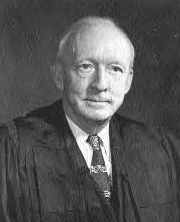 laws which aid one religion, aid all religions, or prefer one religion over another. Neither can force nor influence a person to go or to remain away from church against his will or be punished for entertaining or professing religious beliefs, for church attendance or non-attendance. No tax in any amount, large or small, can be levied to support any religious activities or institutions, or practice religion. Neither a state nor the Federal government can, openly or secretly, participate in the affairs of any religious organizations or groups, or vice versa. In the words of Jefferson, the clause against establishment of religion by law was intended to erect ‘a wall of separation between Church and State.”
The issue is with Black’s unwarranted “vice versa.” Government not to participate in religion, religion not to participate in government, this interpretation emphasizes non-establishment at the expense of “free exercise.” It gives the government the right to determine what a religion is, not the religions themselves. The government decides where the “wall” is. Instead of the wall keeping government out of religion, it is a wall to keep religion, as defined by the government, out of public life. Public engagement is part of the very definition of religions like Catholicism and Islam; thus free exercise is diminished by this presumed “wall.”
Catholics need to be in the public square with a loud voice, precisely because of what they believe. The First Amendment was meant to protect the right to participate in public life. Catholicism is a public religion. The government should not decide that it is not. Catholics as individuals, but also institutionally, want a loud voice because of what they believe about the meaning of life “in this world and in the next.” Another needed voice with different transcendent claims and a different transcendent imperative to act on those claims is Islam. Christians should welcome the presence of Muslims with their belief in a transcendent God who has spoken through Muhammad, and whose belief impacts the way that they live.
When Muslims immigrate, they experience the problems of the immigrant: assimilation, resistance, ambivalence, adaptation, rejection, acceptance, and acculturation. For the American Muslim there is an added dimension. Behind the Muslim immigrants lies the fourteen-hundred year old great tradition of Islam. Like Christianity, Islam for a time informed a civilization. The Muslim immigrant and the practice of surrender to God are severely challenged by American secularity. However, the conflict of values is a two-way street. Every immigrant is a challenge to the society’s assimilative power and to its adaptive capacity. If the immigrant is a Muslim, then the immigrant brings to America a religion and culture with more than one billion adherents undergoing a religious and cultural renewal. Muslims, as they seek to live a God-guided life, cannot but confront and contest American secularity. Catholics from their own experience of being American should appreciate the Muslim’s dilemma of being a resident alien. In the words of Pope Francis,
“Our relationship with the followers of Islam has taken on great importance, since they are now significantly present in many traditionally Christian countries, where they can freely worship and become fully part of society . . . In order to sustain dialogue with Islam, suitable training is essential for all involved, not only so that they can be solidly and joyfully grounded in their own identity, but so that they can also acknowledge the concerns underlying their demands and shed light on shared beliefs. We Christians should embrace with affection and respect Muslim immigrants to our countries in the same way that we hope and ask to be received and respected in countries of Islam tradition.”
Muslim and Christian resident aliens need to find cultural space, space to breathe within the polity of America for the free exercise of God-guided lives knowing, loving, and serving God in this world in order to be happy with God in the next. America’s polity, values, and culture will be richer for it.
Daniel Sheridan teaches theology for Saint Joseph’s College.