Today is the feast of St. Mary MacKillop (1842-1909), a saint cut from the same cloth as 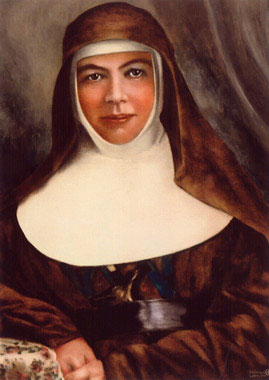 Dorothy Day (1897-1980) and St. Gianna Beretta Molla (1922-62). St. Mary bravely sought to follow God’s will, refusing to accept easy answers or options to what she felt God had called her. A native Australian (of Scottish descent), Mary established her own religious order—since no existing ones quite met her expectations. The Sisters of St. Joseph of the Sacred Heart (or Josephites) staffed orphanage schools and engaged other sorts of charitable work among the poor. Much like Dorothy Day, Mary started this apostolic work in her twenties, and like Day she encountered resistance from powerful church leaders. Mary’s bishop actually excommunicated her for a while, having misread her and her order’s independence as dissent. Much like St. Gianna, who endured physical pain (dying from cancer while pregnant), St. Mary endured the spiritual pain of excommunication patiently. The human foibles that led to St. Mary’s temporary banishment still puzzle us, because she and her Josephite sisters clearly engaged in Christ-like work. Her online biography states:
Despite her struggles with Church authorities, Mary MacKillop and her Sisters were able to offer social services that few, if any, government agencies in Australia could. They served Protestants and Catholics alike. They worked among the aborigines. They taught in schools and orphanages and served unmarried mothers.
Once reinstated, she wisely sought assistance from Rome and eventually won the support of Pope Leo XIII himself. At her death in 1909, the Josephites thrived. Beatified in 1995 by St. John Paul II, St. Mary MacKillop was canonized, the first Australian recognized as a saint, in 2010 by Pope Benedict XVI.
St. Mary’s witness resonates in today’s lectionary, too. Like Dorothy and St. Gianna, and surely an entire host of holy women—some canonized, others known only to God—St. Mary MacKillop feared God’s authority, not men’s. Through the prophet Jeremiah God declares He will gather the remnants under new leadership, ones who tend to God’s people. “I will appoint shepherds for them who will shepherd them so that they need no longer fear and tremble; and none shall be missing”. Psalm 23 likewise celebrates God’s abiding care, even in the shadows, while St. Paul encourages the Ephesians through Christ the remote and marginalized are brought near to God. St. Mary MacKillop endured what she did sustained by these biblical calls to justice for God’s people.
Finally, St. Mark (ch. 6:30-34) details Christ’s concern for the masses—many of whom thwarted his and the apostles’ desire for quiet reflection—and His unflinching gift of Himself. After all, they were “like sheep without a shepherd.” Surely this very Gospel example helped inspire St. Mary’s wide-ranging work among Australia’s poor. William Placher, along with many other theologians and biblical scholars, has noted St. Mark’s stark, often shocking, imagery which propels Christ through the Gospel. In Mark, Jesus always acts immediately. It is almost as if Jesus is impatient with the entire narrative, rushing through His ministry towards the Passion, His ultimate self-giving. Facing a leaderless yet expectant crowd, the exhausted Jesus teaches nonetheless. That same fervor spikes our interest in saints like St. Mary MacKillop, holy women who courageously addressed the problems right before them.
Guest blogger Jeffrey Marlett blogs at Spiritual Diabetes.