
Mary’s Prophetic Witness as Our Model

Worth Revisiting Wednesday – This post originally appeared on September 10, 2014.

This work week begins with our September 8 liturgical celebration of the birthday of the Blessed Virgin Mary.  We may echo the words of her divine Son in the Gospel of John (18:37) and apply them to His Mother: the Virgin Mary came into the world to bear witness to the Truth, to Jesus Christ.  All who are on the side of truth listen to His voice—this is Mary’s directive to us, also: “Do whatever He tells you” (John 2:5).
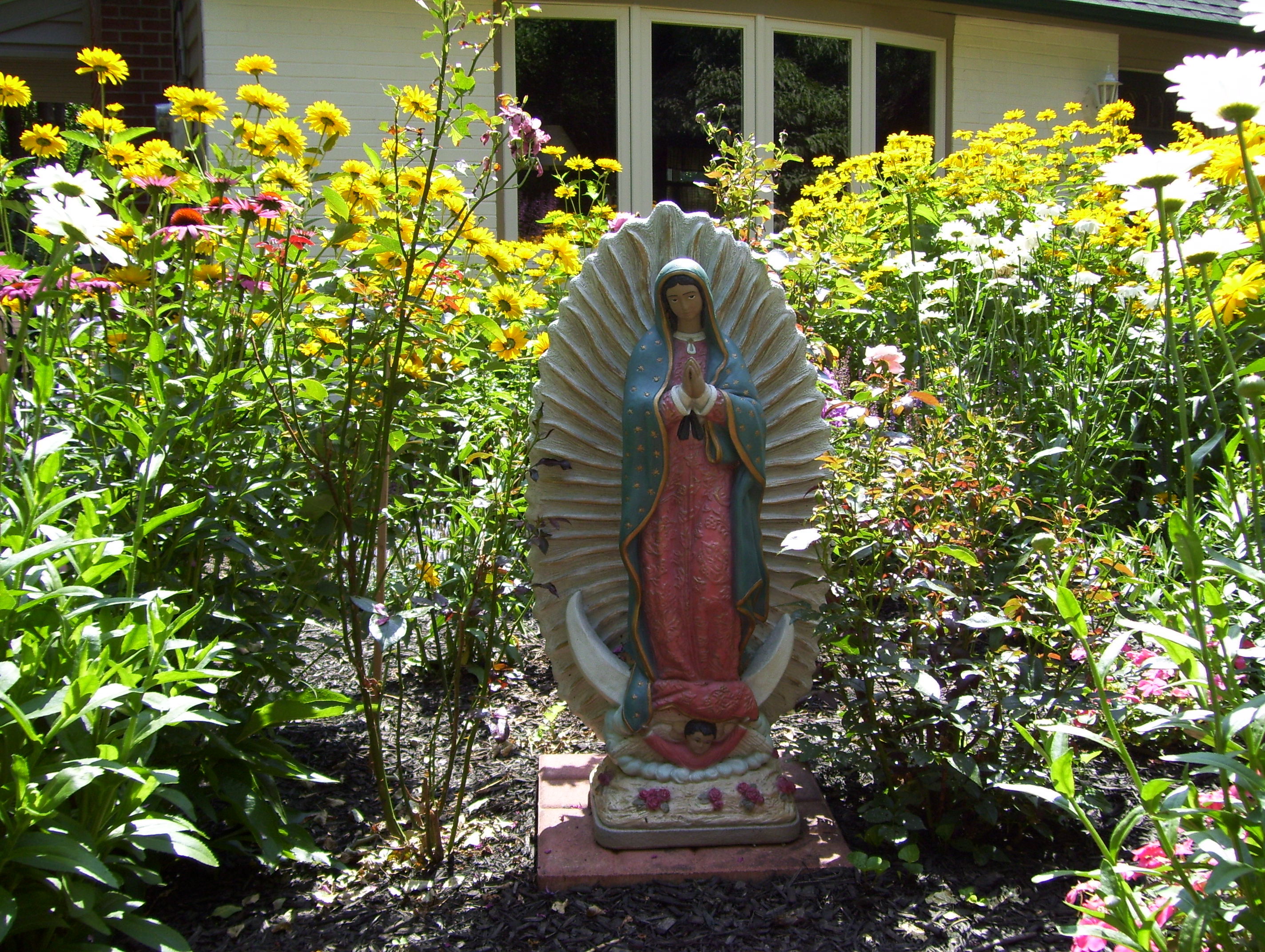
100_0107(rev 0)The Virgin Mary and her prophetic mission really resonate with today’s September 10 readings.  The first reading from 1 Corinthians begins with St. Paul’s reference to virgins and ends with his assertion that “the world in its present form is passing away.”  The Virgin Mary’s detachment from worldly attractions, and her focus on “what is above” (Colossians 3:1-2)—on embracing God’s will (Luke 1:38)—underscore the transiency of this world.  Today’s Responsorial Psalm, drawing from Psalm 45, addresses the “king’s daughter.”  The high Christological tone is obvious: the king above kings is God, and His God has anointed Him (45:7-8).  The name of the king’s daughter will be renowned through all generations (45:18): Mary’s Magnificat alludes to this—“from now on all generations shall call me blessed” (Luke 1:48).

The Blessed Virgin certainly embodies the teaching of Jesus in His Sermon on the Plain, imparted through the Gospel reading according to St. Luke.  Jesus tells us, “Blessed are you who are poor, for the Kingdom of God is yours.”  Mary is blessed by being poor—materially poor, yes (e.g., Luke 2:24, offering the poor person’s sacrifice), but more importantly, spiritually poor, or humble.  She demonstrated her humility so profoundly by embracing God’s will in all things, including accepting the humbling, humiliating, and devastating circumstances that befell her.

Mary of Nazareth had to place her newborn Son in a manger because there was no room for the Holy Family in the inn.  She lived in the Nazarene community in which citizens—some of whom Mary probably knew quite well—rejected her only Son and disdained Him enough to try to hurl Him down the brow of the hill upon which Nazareth was built. (Luke 4:29).  Not too long afterward, the leaders of His own people delivered Him to betrayal, torture, and execution.  Mary was there.  She felt His pain and shared in His rejection.

The Virgin Mary fulfilled Simeon’s prophecy: “And a sword shall pierce your own soul, too” (Luke 2:35).  Simeon seems to prophesy about Mary in continuity with and in partial fulfillment of Zechariah 12:10: “And I will pour out on the House of David and on the inhabitants of Jerusalem a spirit of grace and supplication.  And they shall look upon me, whom they have pierced; and they shall mourn for him as one mourns for an only child, and grieve bitterly for him as one grieves for a first-born son.” [This is my own translation from Biblical Hebrew into English.  Notice, from the Hebrew translation, the identity of the object pronoun—“they shall look upon me”!  Many translations change the pronoun from first masculine singular to third masculine singular.]  As Jesus, the first-born and prophesied Shepherd (Zechariah 13:7-9) is struck and pierced by the sword/lance as a sign of contradiction, so too Mary’s soul is pierced by the sword, metaphorically.  Her pain, in union with her Son, is emotional and spiritual.

In the Sermon on the Plain, Jesus tells us, “Blessed are you who are now weeping, for you will laugh.  Blessed are you when people hate you and when they exclude and insult you…on account of the Son of Man…your reward will be great in heaven!”  The Blessed Virgin exemplifies this blessed and exalted one of whom Jesus speaks.  Her fidelity and obedience to God’s will in her life is our standard for authentic discipleship and prophetic witness.  With the Virgin Mary’s example and powerful intercession for divine grace, we may be light in darkness, love in a world gone cold, setting the earth ablaze by the love of Christ!

Mark Koehne teaches moral theology for Saint Joseph’s College.
 

Who is Saint Francis of Assisi?

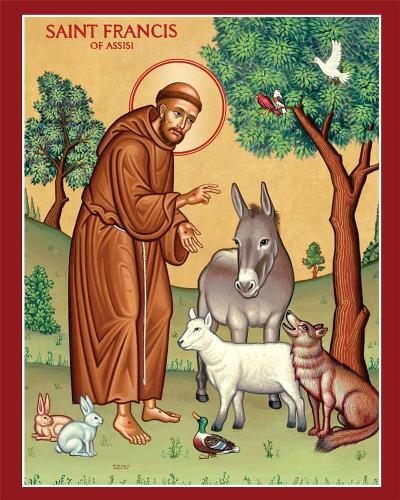
Saint Francis of Assisi, born in 1182, lived only 44 years, dying in 1226. He was the son of st_francis_assisi_prayer_carda wealthy merchant, known for taking to the streets with his friends for fun and frolic. However, as he reached manhood, he took off for battle between his town of Assisi and the town of Perugia, Italy, where he landed in prison. Upon his release from prison in 1205, he sought the meaning of life, thinking it should be so much more than following in his father’s footsteps. Therefore, Francis turned his back on the family business to embrace the love of God and serve God through the imitation of Christ. He became a living human example of Christ in action, loving God and all that God made.

Francis was not a theologian, buried amidst a pile of books looking for the true meaning of God. No, Francis found God in his own heart, the heart that burned with love. Through prayer and contemplation, penance and sacrifice, Francis developed a loving relationship with God from which the essence of his spirituality flowed.

Francis trusted God. By detaching himself from earthly cares, he freed himself to open his heart to God. He moved from a life of luxury and indulgence to a life of austerity and self-imposed poverty. He embraced the simplicity of Christ’s life, following Christ as closely as possible. Three biblical passages were near and dear to Francis’ heart and guided his every action:

  1. Jesus said to him, ‘If you wish to be perfect, go, sell what you have and give to the poor, and you will have treasure in heaven. Then come, follow me’ (Matt 19:21).
  2. Then Jesus said to his disciples, ‘Whoever wishes to come after me must deny himself, take up his cross, and follow me’ (Matt 16:24).
  3. He said to them ‘Take nothing for the journey, neither walking stick, nor sack, nor food, nor money, nor let no one take a second tunic’ (Luke 9:3).

Francis lived by these instructions. He never worried about where his next meal would come from; where he would lay his head to rest; or how he would keep warm in winter. He knew God would provide.

Francis’ approach came across as refreshing to those who became followers. By his own example, he lived the Gospel, rather than talk about the Gospel. Francis did everything for love of God, neighbor and nature, by expressing passion about God and everything that God made.

Francis liked being around people most of the time. However, he understood the need for solitude, silence and stillness. In living the Gospel, he recognized that Christ would also go to pray alone before important decisions or events. Francis would do the same. Yet, he also saw the need to be among the people in service to their needs. He balanced his time between service and solitude.

Within only three years of release from prison, Francis had twelve companions who joined him. They were a community emphasizing a top priority on love, fellowship, brotherliness, and mutual support. Within a year’s time of banding together, Francis recognized a need for organization and a rule of conduct for his little community. The very first sentence of the Rule summarizes all that Francis wanted to accomplish in establishing the Order of Friars Minor:

The rule and life of the Minor Brothers is this, namely to observe the holy Gospel of our Lord Jesus Christ by living in obedience, without property, and in chastity (Rule of Saint Francis, Catholic Encyclopedia).

This statement directly correlates back to the three biblical passages from the New Testament, continually referred to by Francis to define what it means to follow Christ.

Men of all different walks of life joined the Order; the wealthy and the poor, the educated and the uneducated; all were welcome. Everyone was treated the same, with no distinctions, except for ordained priests. Francis thought it important that all men should be considered equal, to better foster humility. Francis also believed in obedience, poverty and chastity because Jesus was obedient to God the Father. Jesus lived a life on earth in poverty, and Jesus never married. With the establishment of the Order of Friars Minor formally blessed by papal authority, Francis sent his fellow brothers throughout Europe in pairs of two to evangelize as described in Luke 9:3.

Saint Francis of Assisi is considered one of the greatest saints because of his simplicity, sincerity, compassion, humility, gentleness, and joyous nature, the radical commitment to following Christ, and trust in God to provide. Francis possessed a willingness to live amongst the poor, to understand their struggles and to strive to bring souls to God through his preaching. Francis imitated Christ in everything that he thought and did. He encountered Christ daily, truly living the deep Christian way of living that defines Christian spirituality. Francis was open to God; giving his life over to God, so that the will of God would be accomplished in the life of Francis.

The charisms of Saint Francis flow forth into every person who becomes a Franciscan (Order of Friars Minor, Poor Clares, or Secular Franciscan). Today, we have over one million Franciscans. The simplicity, sincerity, compassion, humility, gentleness, and joyous nature, the radical commitment to following Christ, and trust in God to provide, so effervescent in Francis, are trademarks of Franciscan spirituality to this day. Living the Gospel, with authenticity, is a very alluring attitude that draws people in. Extending care and concern keeps one’s attention. Service with love converts followers. Coming to know Jesus in your heart, not just knowing about Him from reading books, that creates Christians – and that is what Franciscans do – they “rebuild the Church!”

Virginia Lieto teaches spirituality for Saint Joseph’s College. She recently published her first children’s book Finding Patience and blogs at virginialieto.com.