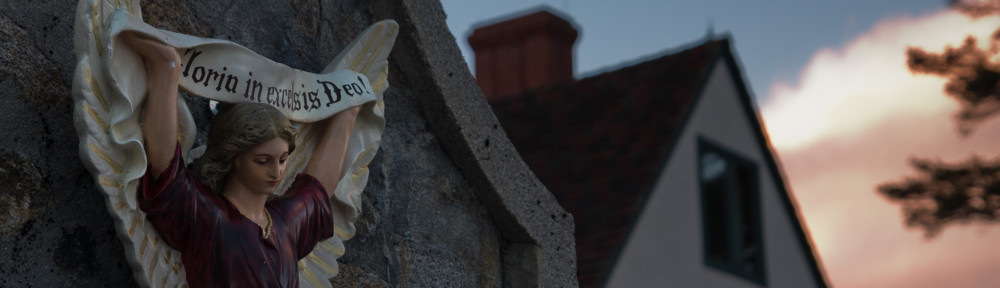
The Heart of Marriage

It takes three to make love, not two: you, your spouse, and God. Without God people only succeed in bringing out the worst in one another. Lovers who have nothing else to do but love each other soon find there is nothing else. Without a central loyalty life is unfinished.

Fulton J. Sheen, Seven Words from Jesus and Mary: Lessons from Cana and Calvary


My husband and I in Venice December 2013

My husband and I in Venice December 2013

This week, September 1st mixed the sacred and the profane in a special way in my life. It marked Labor Day and my 24th wedding anniversary, and so, I have the hard labor of marriage on my mind, a labor of love.

I often think back about seven years ago when a priest offered me life-changing counsel in response to my confession of impatience with my husband and worse, resentment towards him for a bad business decision and its terrible and lingering effects. Father reminded me that my crosses are also my blessings – and it is within my marriage and family that I will receive my greatest blessings and crosses.

It was as if a crushing weight was lifted off my shoulders and I understood anew the sacramentality of marriage, of my marriage. I had forgotten that Cana is hallowed through Calvary: love is inseparable from the cross of Christ. Indeed, love waxes greater through our participation in His redemptive suffering. I could not change past decisions and their material effects on my family’s life, but with the grace of God, I could change. I recognized that as I had allowed my bitterness to increase, the presence of God had decreased. I had sidelined Him; thus I had sidelined my marriage.

The late Catholic book publisher Frank Sheed used to say to his wife when he went away on a business trip something to this effect: Whenever you find yourself missing me, just look to the pierced side of Christ, and there I will be. Christ was the center—the heart—of their marriage, and that very heart was pierced for the sake of love. Paradoxically, when Sheed’s wife placed the pain and longing of her heart inside the pierced heart of Christ, she found her love. She was united with her husband in the most profound sense of the word, however far from her “in the body” he may have been. This is the love that does not cover over feelings of pain and longing, but draws out their deepest meaning.

Saint Bernard Church stained glass, Burkettsville, Ohio.

Saint Bernard Church stained glass, Burkettsville, Ohio.

Christ lives in the heart of a sacramental marriage. For husband and wife, then, their marriage is their road to sanctity. It is a road strewn with blessings and crosses, and when traversed with Christ as the center, both blessings and crosses are embraced as if there is no distinction between the two, and indeed there is none.
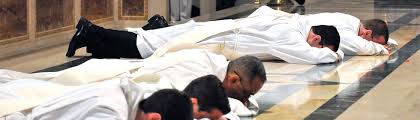
 

The Gift of Celibacy

Not long ago, I had the pleasure of attending a Mass to celebrate the 50th anniversary of ordination to the priesthood and on the same day the first Mass of a newly ordained priest. Both were so filled with joy. In one, the joys of a lifetime of service to the church, in the other the joy of embarking on a new life. I was struck by how grateful both men are for the gift of their priesthood.

This juxtaposition also made me think about a recent article I read on the results of a survey that the Pew research company did on Catholics’ attitude on priestly celibacy. The study reported that 7 in 10 Americans think priests should be able to marry. I think this ordinationreflects a misunderstanding of the vow of celibacy and the ministry of the priest. Celibacy is indeed a sacrifice; it is however a sacrifice rooted in love.

Celibacy is not an end in and of itself, some sort of life-long chastity battle, but rather it is a means to an end. It is a means to love freely, generously and fully, not one other person– as in a marriage– but to love all God’s people and to be free to extend that love in whatever way people need it; hospital rooms in the middle of the night, funerals on holiday weekends, Mass at 7:00 am before work. Availability is one end of celibacy. The Catechism of the Catholic Church teaches that celibacy “[I]s … a giving of oneself entirely to God and to the Church, a ‘sign of this new life to the service of which the Church’s minister is consecrated; accepted with a joyous heart, celibacy radiantly proclaims the Kingdom of God’” (1579).

Another end of celibacy is to be a sign to the world that we are made for union with God, that even marriage is a means—a way of learning to love– in preparation for an eternal union with God. A friend of mine who served as a priest chaplain in the Air Force observed that often he was called to the hospital at the request of an injured airman, an airman who was not a Catholic, but asked specifically for the priest thinking he was somehow closer to God, perhaps holier! My friend was always quick to point out that priests are not by default holier. Rather, the witness of the celibate life is a sign of a desire and a discipline to live one’s life first and foremost for God and with God and people perceive that in some way. This kind of experience in these visits were both a grace for my friend and a reminder that he is called and people expect him to live differently because of his priesthood.

I have the privilege to work with many priests and most of them are very happy men. They speak honestly about how celibacy can be hard sometimes and life can feel lonely (what married person would not say the same). What they appreciate is the grace that comes with faithfully living a celibate life and the moments of grace they experience bringing God’s love into people’s lives in moments of great joy and moments of total despair. Priests have a very privileged place in the lives of the people they serve and that, many of them would not trade for the world!

Susan Timoney is the Assistant Secretary for Pastoral Ministry and Social Concerns for the Archdiocese of Washington and teaches spirituality for Saint Joseph’s College Online.