This coming week, we celebrate Random Acts of Kindness Week! Why is it, as a society that we wait for special occasions to do the things we should do regularly? For example, at T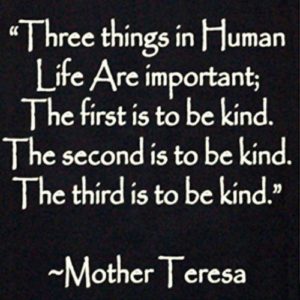 hanksgiving, we donate to our local food pantry. At Christmas we buy a present for an orphaned child. The list goes on. And yet, without that special occasion, we move back to the routine of our lives, centered around what is on our own personal agendas. With Random Acts of Kindness Week upon us, some of us will once again use a special occasion to take the time to do something nice for someone else. Such acts of kindness make us feel good for the moment. Think about that “feel good moment” for a moment. Wouldn’t you like to have that feeling more often? If so, what is stopping you? For some of us, we get caught up in the mundane tasks required of us each day. For others it is because we have too much on our “to-do” list already. Either way, we lose sight of what is really important.
What is really important? We were put on this earth to imitate Christ; to do good deeds for the benefit of others; to act in a manner where we should expect nothing in return for kindnesses extended to others. We were put here to follow God’s will. What do you think He is asking of you today? Is He asking you to make your laundry your number one priority, or is He asking you to feed the hungry, clothe and shelter the poor, care for the sick and elderly, and love your neighbor as your top priority?
I have a challenge for you: Rather than performing one act of kindness this week, give thought to how you can incorporate kindness into your daily routine. Make it a part of your character. Lent is swiftly approaching. Perhaps, rather than giving something up, like chocolate, how about using this time to build new habits of virtuous behavior related to acts of kindness? Here are just a few ways that you can do this and have that feel good moment on a routine basis:
- Donate your time to a local food bank or homeless shelter.
- Donate your talents in helping others learn what you already know.
- Donate your money to sponsor a child in need.
- Volunteer at a hospital.
- Visit the elderly in nursing homes, and give your love.
- Visit the imprisoned and share your faith.
I challenge you to embrace that feel good moment more often! I encourage you to grow closer to God through acts of love and kindness extended to your neighbor. It might mean reprioritizing your life slightly to make room for the Holy Spirit to work within you, but the joy that you will feel by doing so will last a long time.
The fruit of the Spirit is love, joy, peace, patience, kindness, generosity, faithfulness, gentleness, self-control (Gal 5:22-23).
Allow the fruit of the Holy Spirit to blossom within you! Be kind to others!
Virginia Lieto teaches in the Catechetical Certificate Program for Saint Joseph’s College Online.