Peace and Prayer

On Saturday, March 28, 2015, the Church noted and celebrated the 500th anniversary of the birth of Teresa of Jesus [of Avila], saint and doctor of the Church. In honor of this great feast, Carmelites from all over the world united to pray for peace and invited all of us to join them. Pope Francis took this to heart and celebrated a special liturgy on March 26, spread the word on the World Prayer for Peace, and wrote a letter to the Carmelite Superior General.

In this letter, Pope Francis expresses that St. Teresa’s example can help continue the renewal of consecrated life (to which this year is dedicated!), primarily through her gift as a teacher of prayer. Teresa built monasteries where community life could thrive and the risk of individualism could be thwarted.

Along this line, there is word of a new kind of monastic community in the early stages of being founded through the Cloister walkexpansion of modes and ease of communication. This new community, the Sisters of the Most Sacred Silence, is dedicated to the monastic life – a life of prayer, sacrifice, and labor – in the Carmelite tradition. The unique and innovative aspect of this new emerging monastery is that it is virtual! It exists entirely online! Members live in their own places, but gather online for the Liturgy of the Hours, following GMT for the common time regardless of individual’s time zones.
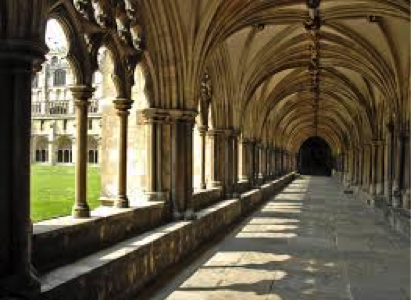
To be sure, the members of this group need to be creative to maintain both the cloister and community via the internet. The traditional role of portress (the one who answers the door, a post that has ministry of many saints!) now takes on the position of “keeper of the page.” She maintains the dedicated network that, like parental controls, does not permit any secular, sordid, or profane content, just as the portress would protect the sanctity of the cloister. Through the use of virtual meeting sites, the sisters are able to have community meetings, adoration together, and for those in common time zones, they have meals together with someone providing spiritual reading for a portion of the meal.

While most of the monastic life can be maintained in this virtual monastery, there are some elements that need to be worked out. For now, the sisters are trying to coordinate visiting priests to come to each members “personal cloister” for the Eucharist as well as Reconciliation. In the meantime, members are able to stream live Mass from various places in the world and have confession on Twitter.

As this new and innovated group grows, do pray that they may be attentive to the promptings of the Spirit and respond to the needs of the times. We pray for them in a special way today as they celebrate their first Chapter on this the feast of Là Ruith na Cuthaige. God’s blessings be upon them!*

*Anything below the second paragraph is a complete fabrication of my imagination! Happy April Fool’s Day!

Sr. Kelly Connors, pm teaches Canon Law for Saint Joseph’s College Online.


The Ultimate Model of Sacrificial Love

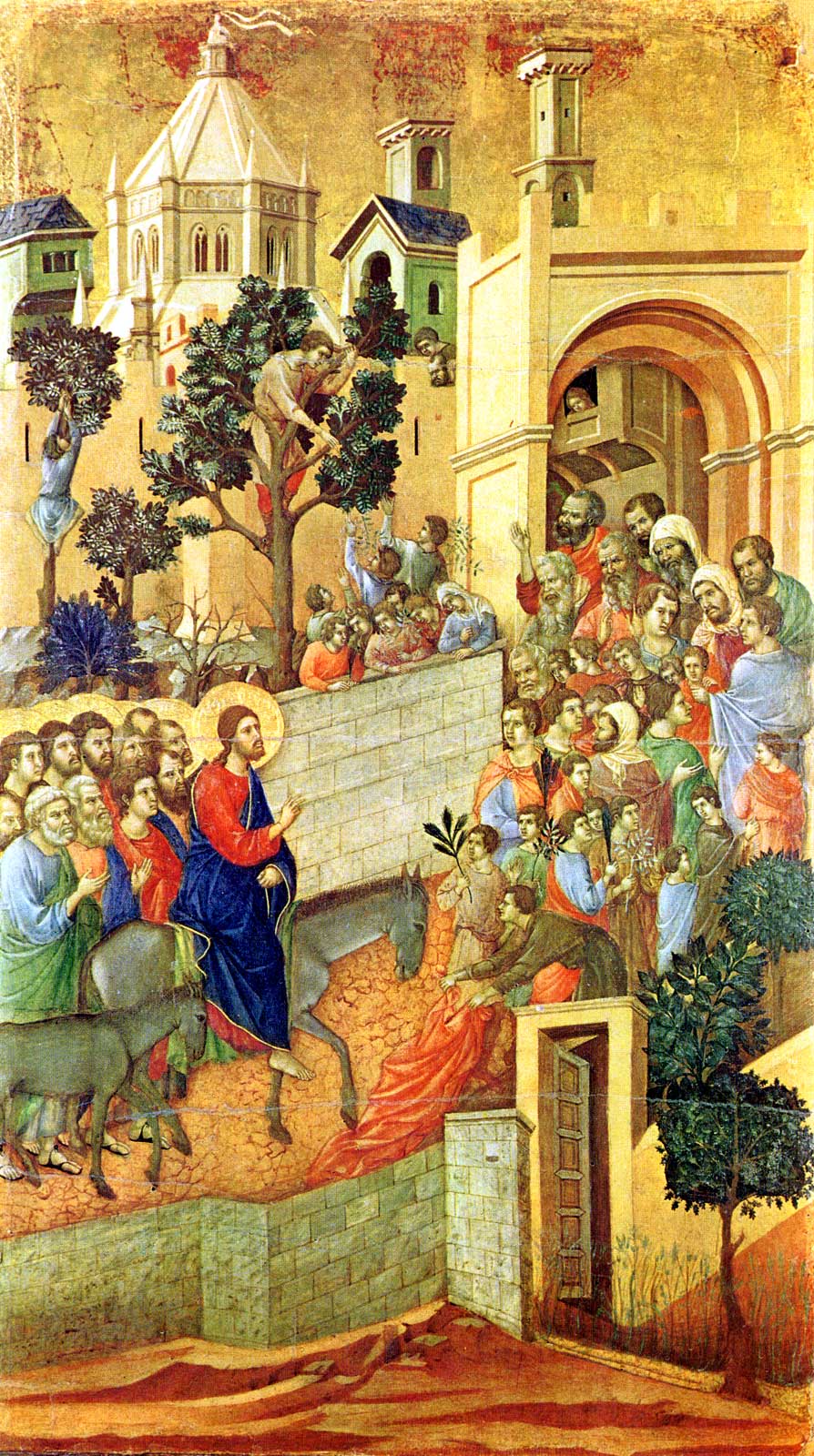
The gospel reading for Palm Sunday tells about Jesus’ glorious entry into Jerusalem. The Jewish authorities were afraid that the people would declare him king, and with that the power of their leadership would be threatened. So the Sanhedrin plotted to put Jesus to death and Judas conspired against him. Palm Sunday is all about the passion of Christ that’s about to take place, all about sacrificial love.

The passion of Jesus was announced in John’s gospel when he said, “The hour has come for the Son of Man to be glorified.” In this statement there is a tremendous paradox because to many of the Jews, the title “Son of Man” stood for an undefeatable world conqueror sent by God. So when he said that, they believed that the triumph-call of all eternity had sounded, that the might of heaven was on the march, and the campaign of victory had begun.

This is not at all what Jesus meant by “glorified”. By glorified, he meant “crucified.” When the “Son of Man” was mentioned, they thought of the conquest of the armies; he thought of the conquest of the cross.

EntryIntoJerusalem-DuccioAs Jesus rides into Jerusalem and he looks at the City, he sees what the people could not see. It is there on the outskirts of the city that the battle will end. He sees the staging of Satan. The Evil One has seized the heart of Judas and he has whispered in the ear of Caiaphas. Jesus knew that when the going got tough, his closest friends would run, and that his was not the glory of popularity, but the glory of isolation. It was glory because it was for us, and because it was instead of us.

Jesus knew that before the war would be over, he must be taken captive. He knew that before victory there would be pain. He knew that before the throne would come the cup. He knew that before the light of Easter Sunday, there must be the darkness of Good Friday, and before his ascent into heaven, there must be a descent into hell. At the very moment when the crowds of people would be cheering, Jesus would be in agony.

He would be in agony because this was his hour, the hour to which every word and every act in scripture pointed. Jesus would be in agony because He knew from all eternity past that this was indeed the time for the cross. It was agony for Jesus to do the will of his Father, but there was no other way. Jesus was not saved from this hour. He was saved for it, and so are we. What was the passion of Jesus? We are the passion of Jesus because in the end Jesus would rather go through hell for us than go to heaven without us.

Jesus made a decision, a decision that would change the course of history forever. His entry into Jerusalem would not be in anticipation of being crowned; it would be in anticipation of being crucified. It would be the ultimate example of supreme courage, knowing He was going, voluntarily and sacrificially to his death on our behalf, as our ransom, as our substitute.

Jesus came to the Jews with a new view of life. They looked on glory as conquest, the acquisition of power, and the right to rule. He looked on it as the cross. He taught that life comes only by death, that only by spending life do we retain it, and that greatness only comes through service.

Jesus was fighting a battle with the human longing to avoid the cross, but nothing is gained without sacrifice. Real courage doesn’t mean not being afraid. It means being terribly afraid, yet sacrificing out of love, doing what must be done for the good of others and for the glory of God.

This is what his passion was all about. Sacrificial love is what we see when we look at the cross. Sacrificial love is the goal of our Lenten journey – the only sure foundation for life, the only sure foundation for a family, a community or a kingdom. Sacrificial love is the only thing that we take with us when we leave this world, and the only thing that will last forever. It’s the key to conversion, the key to becoming just like Jesus.

So for those preparing to come into the church at the Easter Vigil and for all of us preparing for Holy Week, let this be our fervent prayer:

Take from us, Lord, that which continues to separate us from you: pride, greed and selfishness. Increase in us that which brings us closer to you: patience, humility and sacrificial love.

Deacon Greg Ollick teaches Sacred Scripture for Saint Joseph’s College Online.