
My Soul Proclaims!

It is May, the month of mothers and Mary. This weekend I am sharing reflections of Mary’s prayer, the Magnificat, with a small group of women at a retreat house in NH

The many translations and interpretations of the Magnificat can really break open and Visitationexpand the depth, scope, and meaning of this beautiful prayer that is sung, chanted, or read every evening in the liturgy of the hours.

Sometimes it can fall into the category of a “pretty” hymn or song, inspiring music without regard for the words; sometimes it can become routine words without reflection. It can become so familiar that we stop hearing the prayer, the blessings, the challenge, the grace, and the mercy witnessed to and passed on in its context and text.

I invite you to take some time today to sit with these rich words placed in the mouth of Mary in the Gospel of Luke (1:46-55). Note how they tell the story of our salvation history; compare this translation to others you know or have seen or to interpretations you have heard in song. Reflect on God’s goodness to you, your humble state, God’s repeated acts of mercy throughout time, the justice of God as revealed through Jesus Christ and the covenant renewed of God’s presence and mercy to be with us always.

My soul glorifies the Lord

and my spirit rejoices in God my Savior,

for he has been mindful of the humble state of his servant.

From now on all generations will call me blessed,

for the Mighty One has done great things for me —

holy is his name.

His mercy extends to those who fear him,

from generation to generation.

He has performed mighty deeds with his arm;

he has scattered those who are proud in their inmost thoughts.

He has brought down rulers from their thrones

but has lifted up the humble.

He has filled the hungry with good things

but has sent the rich away empty.

He has helped his servant Israel,

remembering to be merciful

to Abraham and his descendants forever,

just as he promised our ancestors.


(New International Version. Grand Rapids: Zondervan House, 1984. Print.)

Sr. Kelly Connors, pm, teaches Canon Law for Saint Joseph’s College Online.
No one has greater love than this, to lay down one’s life for one’s friends (Jn 15.13)

“A servant of God cannot know how much patience and humility he has within himself as long as he is content. When the time comes, however, when those who should make him content do the opposite, he has as much patience and humility as he has at that time and no more” (Francis of Assisi Admonition 13).

This admonition of St. Francis reflects on Matthew 5.9, but it could just as well be a reflection on our gospel for this Sunday. Like the first century followers of Jesus (despite the impression you might have had from Hollywood movies), we in the United States are rarely asked literally to die for our friends or our community. The Johannine literature recognizes that and offers an interpretation of a daily death for our friends, long before the desert and monastic traditions developed their own understandings and practices.

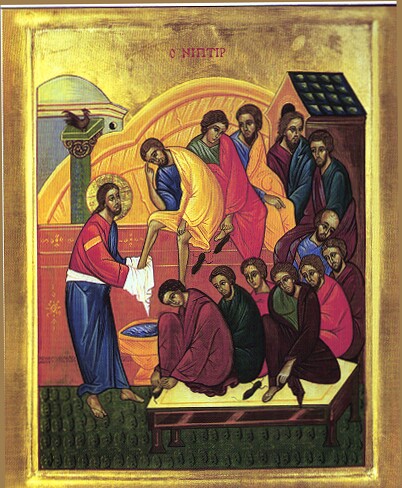
Though the Farewell Discourse (John 13-17) is complex and repetitious, its goal is clear: to show how Jesus provides the foundation for the new community. The foot-washing as footwashingprophetic action provides the paradigmatic for the discourse. Jesus lays aside his garment for the menial task of washing his followers’ feet, as he will soon lay aside his life (13:4; cf. 10:17 in the Good Shepherd discourse). The double washings discussed of feet (13: 6, 8) and entire body (13: 9-10) refer to the cleansing of sin by baptism (the entire body) and the future need for the daily self-sacrifice required in community, as provided for by the actions of Jesus. Illustration completed, Jesus then takes back up his garment/life (13:12; 10:17) to speak to the disciples in the narrative as a prefiguring of the resurrection; to the Johannine community near the end of the first century, he speaks as he always addressed them, as the resurrected Lord present with them who enables love of one another.

The work of patience and humility, or better, the spiritual character that makes them possible, is a daily conversion of laying aside the false self or the “old self” (see Eph 4.22-24), that seeks happiness in success, esteem, money, power, and other temporary satisfactions of infantile needs. What Francis points us to, however, is the blessedness of those moments when the false self raises its head and we fail, those God-given glimpses into how much we still need to release to make room for God. As Thomas Keating reminds us, ‎”Nothing is more helpful to reduce pride than the actual experience of self-knowledge. If we are discouraged by it, we have misunderstood its meaning” (Invitation to Love).

Pamela Hedrick teaches Sacred Scripture for Saint Joseph’s College Online.