
Not long ago, I had the pleasure of attending a Mass to celebrate the 50th anniversary of ordination to the priesthood and on the same day the first Mass of a newly ordained priest. Both were so filled with joy. In one, the joys of a lifetime of service to the church, in the other the joy of embarking on a new life. I was struck by how grateful both men are for the gift of their priesthood.
This juxtaposition also made me think about a recent article I read on the results of a survey that the Pew research company did on Catholics’ attitude on priestly celibacy. The study reported that 7 in 10 Americans think priests should be able to marry. I think this 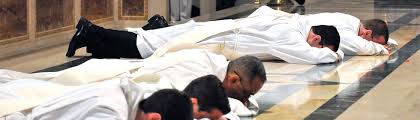 reflects a misunderstanding of the vow of celibacy and the ministry of the priest. Celibacy is indeed a sacrifice; it is however a sacrifice rooted in love.
Celibacy is not an end in and of itself, some sort of life-long chastity battle, but rather it is a means to an end. It is a means to love freely, generously and fully, not one other person– as in a marriage– but to love all God’s people and to be free to extend that love in whatever way people need it; hospital rooms in the middle of the night, funerals on holiday weekends, Mass at 7:00 am before work. Availability is one end of celibacy. The Catechism of the Catholic Church teaches that celibacy “[I]s … a giving of oneself entirely to God and to the Church, a ‘sign of this new life to the service of which the Church’s minister is consecrated; accepted with a joyous heart, celibacy radiantly proclaims the Kingdom of God’” (1579).
Another end of celibacy is to be a sign to the world that we are made for union with God, that even marriage is a means—a way of learning to love– in preparation for an eternal union with God. A friend of mine who served as a priest chaplain in the Air Force observed that often he was called to the hospital at the request of an injured airman, an airman who was not a Catholic, but asked specifically for the priest thinking he was somehow closer to God, perhaps holier! My friend was always quick to point out that priests are not by default holier. Rather, the witness of the celibate life is a sign of a desire and a discipline to live one’s life first and foremost for God and with God and people perceive that in some way. This kind of experience in these visits were both a grace for my friend and a reminder that he is called and people expect him to live differently because of his priesthood.
I have the privilege to work with many priests and most of them are very happy men. They speak honestly about how celibacy can be hard sometimes and life can feel lonely (what married person would not say the same). What they appreciate is the grace that comes with faithfully living a celibate life and the moments of grace they experience bringing God’s love into people’s lives in moments of great joy and moments of total despair. Priests have a very privileged place in the lives of the people they serve and that, many of them would not trade for the world!
Susan Timoney is the Assistant Secretary for Pastoral Ministry and Social Concerns for the Archdiocese of Washington and teaches spirituality for Saint Joseph’s College Online.
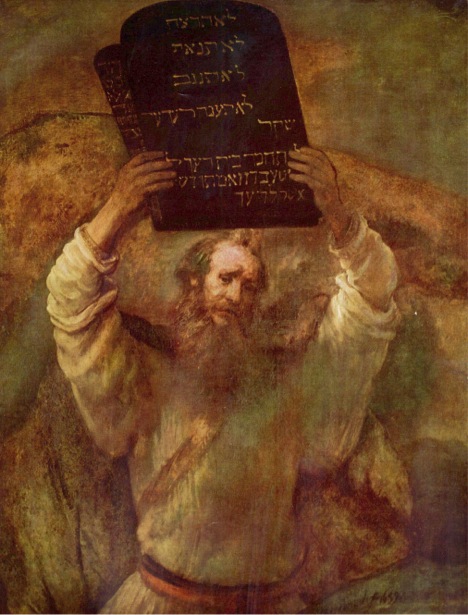
 sed to reveal His ‘beauty’ or ‘goodness’ (tub) to the prophet (Ex 33:17-19). But rather than simply display His presence, God also speaks His glory to Moses. While passing over Moses, God utters His divine name (see Ex 3:14) – a very intimate act – and then verbally communicates His presence. God says: “The LORD, the LORD, a merciful and gracious God, slow to anger and rich in kindness and fidelity” (Ex 34:6). This revelation of God’s nature, i.e., “slow to anger and rich in kindness,” is almost axiomatic in the Hebrew Scriptures (e.g., Nm 14:18; Neh 9:17; Ps 85:15; 103:4-8; 145:8; Jl 2:13; Jon 4:2; etc.). In other words, later prophets and psalmists discerned well that this phrase reveals – as much as human words can – something essential of God’s divine nature.
 ontained in the parable of the Prodigal Son (Lk 15:11-32). Although much can be said of each of the main characters in this parable, the father in this story mirrors well the love and patience which our Heavenly Father has for each one of us. When his spendthrift son asks for his inheritance (which is tantamount to saying, “I wish you were dead so that I could have my money now!”), the father honors the freedom of the son and acquiesces to his request. Upon the son’s return the father spies him from “a long way off,” suggesting that he has been vigilantly awaiting this moment, and embraces his son with neither reserve nor hesitation. Despite living a life of debauchery and impurity, squandering his inheritance on prostitutes and tending to unclean animals, the son’s sincere contrition and confession are enough to send the father into a flight of rapturous joy.